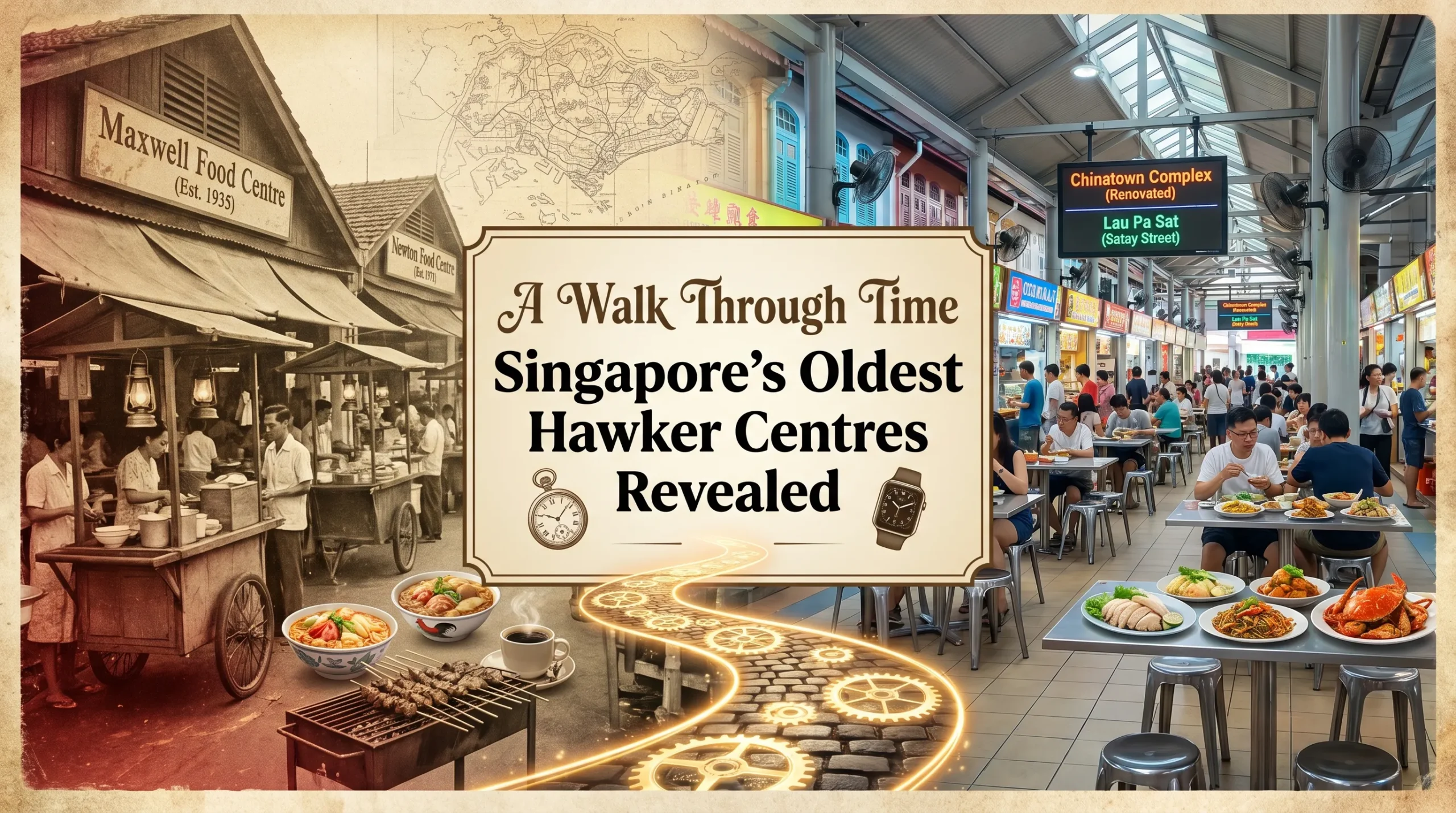
Singapore’s hawker centers are more than places to eat. They are living time capsules where recipes, stories, and neighborhoods meet. From the iron ribs of Lau Pa Sat to the bustling rows at Maxwell and Newton, each centre carries the spirit of a different era. You hear the woks, see the queues, and taste the craft that families have passed down for decades. This guide takes you on a walk through the oldest centres and the people who shaped them. You will learn how street stalls became organised hubs, why certain dishes became icons, and how new hawkerpreneurs are keeping traditions alive.
Along the way, you will find tips, dates, and highlights to help you plan your own visits.
Ready to start with a quick snapshot of what matters most.
Here are the key takeaways.
Key Takeaways
-
Singapore’s oldest hawker centres are cultural landmarks that preserve culinary traditions and foster community connections.
-
These centres evolved from street stalls to organized spaces, ensuring food safety and accessibility for all.
-
Hawker centres serve as vibrant gathering places, promoting multicultural exchange and social interaction among diverse communities.
-
The recognition of hawker culture by UNESCO highlights its significance in preserving Singapore’s unique identity and heritage.
-
Younger generations are revitalizing hawker centres by blending traditional recipes with modern business practices, ensuring their relevance for the future.
Origins of Hawker Centres in Singapore
From Street Stalls to Hawker Centres
Singapore’s hawker centres have a rich history that traces back to the bustling street food scene of the 19th and early 20th centuries. Street hawkers once lined the roads, offering affordable meals to workers and families. By the late 1950s, the number of street hawkers in singapore reached nearly 50,000. This rapid growth led to concerns about public health and urban congestion. In response, the government launched Operation Hawker Control in 1966, aiming to regulate vendors and improve sanitation.
The communal feeding program of the 1940s had already set the expectation for affordable food, shaping the culture that endures today.
The 1960s marked a turning point in singapore’s history. Urban transformation efforts included a hawker resettlement program. Authorities relocated itinerant hawkers into purpose-built centres, providing them with stable locations, running water, and waste disposal systems. These new centres preserved culinary traditions while creating a safer environment for the public. The first official hawker centre opened in 1971, signaling a new era for singapore’s food culture.
Social and Cultural Impact
Hawker centres quickly became central to community life in singapore. They offered more than just meals; they served as gathering places for people from all walks of life. Shared seating encouraged interaction among different ethnic groups, fostering multicultural exchange and mutual respect. Hawker centres are strategically located near residential areas, making them accessible and integral to daily routines. Hawker culture in singapore is recognized by UNESCO as an Intangible Cultural Heritage of Humanity, highlighting its role in preserving multicultural identities and culinary traditions.
Today, over 90% of singapore’s population frequents hawker centres, reflecting their enduring importance. These spaces stand as living symbols of singapore’s diverse heritage, connecting generations through food and shared experiences.
Oldest Hawker Centres in Singapore
Singapore’s oldest hawker centres stand as living monuments to the nation’s culinary and social evolution. These centres have witnessed the transformation of the city from a colonial trading post to a modern metropolis. Each centre tells a unique story, shaped by the communities that built them and the generations of hawkers who have kept their traditions alive. The oldest hawker centres in singapore do more than serve food—they preserve the flavors, languages, and customs of a multicultural society.
Visitors find not only affordable meals but also a sense of belonging and continuity. The aroma of spices, the sizzle of woks, and the lively chatter of patrons create an atmosphere that cannot be replicated elsewhere.
The significance of these centres extends beyond their age. They have adapted to changing times while maintaining their core identity. Many of the oldest hawker centres in singapore have become landmarks, drawing both locals and tourists who seek authentic experiences. The stalls within these centres offer a diverse range of dishes, reflecting the rich tapestry of singapore’s heritage. Some centres have received special designations, recognizing their architectural and historical importance.
Others have become famous for signature dishes that attract long queues and critical acclaim. The following section explores the oldest hawker centres in singapore, highlighting their founding dates, unique features, and the culinary treasures that define them.
Tekka Market (1915)
-
Originally known as Kandang Kerbau Market, this centre reflects its roots in cattle trading.
-
The name “Tekka” derives from the Chinese term “tek kah,” which refers to wild bamboo that once grew in the area.
-
The market underwent redevelopment in the 1980s, leading to its relocation and renaming to better honor its history.
-
Tekka Market stands out for its vibrant mix of Indian, Malay, and Chinese food stalls, making it a microcosm of singapore’s multiculturalism.
-
Notable dishes include Indian rojak, biryani, roti prata, murtabak, mutton soup, vadai, and samosa. These offerings attract both locals and visitors seeking authentic flavors.
People’s Park Food Centre (1923)
People’s Park Food Centre forms part of the larger People’s Park Complex, a landmark completed in the early 1970s. The complex, designed by the renowned Design Partnership, showcases British Brutalist architecture with its bold use of concrete and emphasis on communal spaces. The centre’s striking yellow and green facade, combined with its prominent location along Eu Tong Sen Street, makes it a significant feature in singapore’s urban landscape.
People’s Park Food Centre remains a bustling hub for traditional Chinese cuisine, offering a wide variety of noodles, dim sum, and herbal soups.
Lau Pa Sat (Telok Ayer Market)
Lau Pa Sat, also known as Telok Ayer Market, stands as one of the oldest Victorian structures in Southeast Asia. It is the only remaining market that originally served the central district’s residents in early singapore. Its historical significance led to its designation as a national monument on June 28, 1973. Over the years, the centre’s role evolved from a fish market to a hawker centre in 1972, mirroring the transformation of the surrounding area into a commercial hub.
Lau Pa Sat is renowned for its satay—barbecued meat on a stick—served at open-air stalls along Boon Tat Street every evening. The centre also features a variety of local cuisine, making it a must-visit for those seeking a taste of singapore’s heritage.
-
Popular offerings at Lau Pa Sat include:
-
Satay
-
Local dishes from various ethnic groups
-
Maxwell Food Centre
Maxwell Food Centre began as a wet market in 1928 and transitioned into a hawker centre in 1987. This transformation reflects the broader evolution of singapore’s hawker culture, moving from informal street food to a celebrated aspect of national heritage. Maxwell Food Centre plays a crucial role in integrating diverse cuisines, showcasing the multicultural fabric of singapore. The relocation of hawkers to this centre helped preserve culinary traditions and ensured that affordable food remained accessible to all.
Chomp Chomp Food Centre
Chomp Chomp Food Centre, officially known as Serangoon Garden Food Centre, opened on May 7, 1972. The centre was established to accommodate street hawkers who previously operated around the Serangoon Garden Circus bus bay. The hawkers formed a committee, with help from local students, to choose the name “Chomp Chomp,” a playful adaptation of its Teochew name “Tiong Tiong,” meaning “loyalty and righteousness.” The centre provided built-in stalls with modern amenities, though hawkers supplied their own tables and chairs.
Chomp Chomp Food Centre has earned a stellar reputation as one of singapore’s top destinations for local hawker cuisine. Its vibrant atmosphere and delicious food attract both locals and tourists. The centre is especially famous for its BBQ dishes, such as BBQ Sambal Stingray, BBQ Chicken Wings, and Satay. Over the years, it has received numerous awards and undergone renovations to enhance the visitor experience.
-
Iconic dishes at Chomp Chomp Food Centre include:
-
BBQ Chicken Wings
-
Satay
-
BBQ Grilled Stingray
-
Hokkien Mee
-
Fried Carrot Cake
-
Satay Bee Hoon
-
Sugar Cane Juice
-
Fried Oyster Omelette
-
Old Airport Road Food Centre
|
Year |
Milestone Description |
|---|---|
|
1937 |
Kallang Airport constructed by the British government, marking the location of Old Airport Road. |
|
1955 |
Kallang Airport ceased operations, paving the way for new airports. |
|
1973 |
Old Airport Road Food Centre established as part of a government initiative to organize street hawkers into licensed food centres. |
Old Airport Road Food Centre stands as a testament to singapore’s efforts to organize and modernize its food culture. The centre is home to heritage stalls that have operated for multiple generations. For example, Cho Kee Noodle has served customers since 1973, with the business passing from Madam Lam and her father to her son Kong, and now to Kong’s daughter Ai Min. This continuity highlights the centre’s role in preserving family-run hawker traditions.
Tiong Bahru Market
|
Year |
Event Description |
|---|---|
|
1950s |
Tiong Bahru Market was established as one of the early hawker centres, marking a shift from street hawking to organized food centres. |
|
1970s |
The colonial government attempted to construct more hawker shelters, highlighting the need for organized food spaces. |
Tiong Bahru Market addresses public hygiene concerns while preserving culinary heritage. The centre showcases singapore’s multicultural food culture, offering a variety of dishes that reflect the nation’s diverse communities. Tiong Bahru Market remains a beloved gathering place for residents and visitors who appreciate its blend of tradition and modernity.
-
Key features:
-
Focus on cleanliness and hygiene
-
Preservation of traditional recipes
-
Representation of multiple ethnic cuisines
-
Newton Food Centre
-
Newton Food Centre is recognized for its vibrant atmosphere and extensive variety of Southeast Asian dishes, making it a key attraction for both tourists and locals.
-
The open-air setting and the authentic experience of enjoying grilled satay, barbecue, and fresh seafood contribute to its appeal as a culinary landmark.
-
The centre has evolved from a neighborhood market in the 1970s to a beloved destination, showcasing diverse offerings from various Asian cultures.
-
Visitors appreciate the lively atmosphere and cultural authenticity, often describing it as a “must-visit” for experiencing true Southeast Asian street food.
-
The late-night culture attracts locals who enjoy unwinding in a casual, convivial environment, further enhancing its reputation.
The oldest hawker centres in singapore continue to shape the nation’s food landscape. Each centre preserves a unique chapter of singapore’s history, offering a window into the past and a taste of authentic local cuisine.
Old Hawker Culture and Heritage
Old hawker culture singapore stands as a living testament to the nation’s resilience and adaptability. The roots of old hawker culture run deep, shaping not only the way people eat but also how they connect with one another. In singapore, old hawker culture singapore has always been more than a means to satisfy hunger. It represents a way of life, where food, heritage, and tradition intertwine. Generations have gathered at these centers, sharing meals and stories that reflect the nation’s multicultural identity. The enduring appeal of old hawker culture singapore lies in its ability to preserve heritage while embracing change.
Each visit to a hawker centre offers a glimpse into the past, where old hawker culture thrives in every dish and every interaction.
The significance of old hawker culture singapore extends beyond the food itself. These centers serve as community anchors, where people from all walks of life come together. The atmosphere buzzes with energy, as the aroma of sizzling woks and the sound of lively conversation fill the air. Old hawker culture singapore fosters a sense of belonging, connecting individuals through shared experiences and cherished recipes. The preservation of old hawker culture ensures that tradition remains at the heart of singapore’s food scene.
As new generations take up the mantle, they continue to honor the values and practices that define old hawker culture singapore. This commitment to heritage sustains the unique character of these centers, making them essential to the nation’s identity.
Signature Heritage Dishes
Old hawker culture singapore showcases a remarkable array of heritage dishes that have stood the test of time. These foods reflect the diversity and ingenuity of singapore’s communities. The table below highlights some of the most iconic offerings found at the oldest centers:
|
Dish |
Description |
|---|---|
|
Originating from Wong Yi Guan in the 1940s, this dish reflects the community spirit of early hawker culture. It evolved from Wenchang chicken rice and adapted to local tastes, showcasing culinary excellence through dedication. |
|
|
Char Kway Teow |
Initially sustenance for laborers in the 1950s and 1960s, this dish has evolved with health trends while maintaining traditional cooking methods that define its flavor. |
|
Laksa |
A fusion of Chinese and Malay culinary traditions, laksa represents the cultural blending in Singapore, showcasing how immigrants adapted their dishes with local ingredients. |
These foods not only satisfy appetites but also preserve the essence of old hawker culture singapore. Each dish tells a story of adaptation, resilience, and pride in heritage.
Keeping Old Centres Relevant
Younger generations now play a vital role in the evolution of Singapore’s hawker culture. Many young individuals, often called “hawkerpreneurs,” have started operating stalls in these historic centers. They blend traditional food practices with modern business strategies, creating a dynamic culture that bridges the old and the new. Their response to the UNESCO recognition of hawker culture has inspired them to preserve these community spaces while infusing them with entrepreneurial spirit and technological skills.
This generational shift ensures that the culture of Singapore’s hawker centres remains vibrant and relevant for years to come.
Singapore’s oldest hawker centres remain essential to the nation’s identity. These venues offer affordable meals, preserve traditional recipes, and serve as community dining rooms. The government’s commitment to maintaining hawker centres ensures that singapore’s culinary heritage thrives. UNESCO’s recognition highlights their global significance. Visitors experience singapore’s multicultural flavors and stories firsthand. The evolution of hawker culture, with awards and international acclaim, demonstrates its enduring appeal.
Singapore’s hawker centres stand as vibrant symbols of resilience and unity.
FAQ
What makes the oldest hawker centres in singapore unique?
The oldest hawker centres in singapore offer a blend of history, culture, and authentic cuisine. Each centre preserves traditional recipes and reflects the multicultural heritage of singapore. Visitors experience a vibrant atmosphere and a direct connection to the nation’s culinary roots.
Are the hawker centres in singapore suitable for tourists?
Tourists find hawker centres in singapore welcoming and accessible. These venues provide a wide variety of local dishes at affordable prices. Many stalls display menus in English, making it easy for international visitors to explore singapore’s diverse food scene.
How do hawker centres contribute to singapore’s culture?
Hawker centres serve as community hubs in singapore. They bring together people from different backgrounds, fostering social interaction and cultural exchange. The centres play a vital role in preserving singapore’s food traditions and supporting generational hawker businesses.
Can visitors find vegetarian or halal options at singapore’s hawker centres?
Most hawker centres in singapore offer vegetarian and halal options. Stalls often display clear signage for dietary preferences. Visitors can enjoy a range of dishes that cater to various needs, reflecting the inclusive nature of singapore’s food culture.
What is the best time to visit a hawker centre in singapore?
The best time to visit a hawker centre in singapore is during meal hours, such as lunch or dinner. Early evenings often see lively crowds and the widest selection of dishes. Some centres operate late into the night, offering a vibrant dining experience.