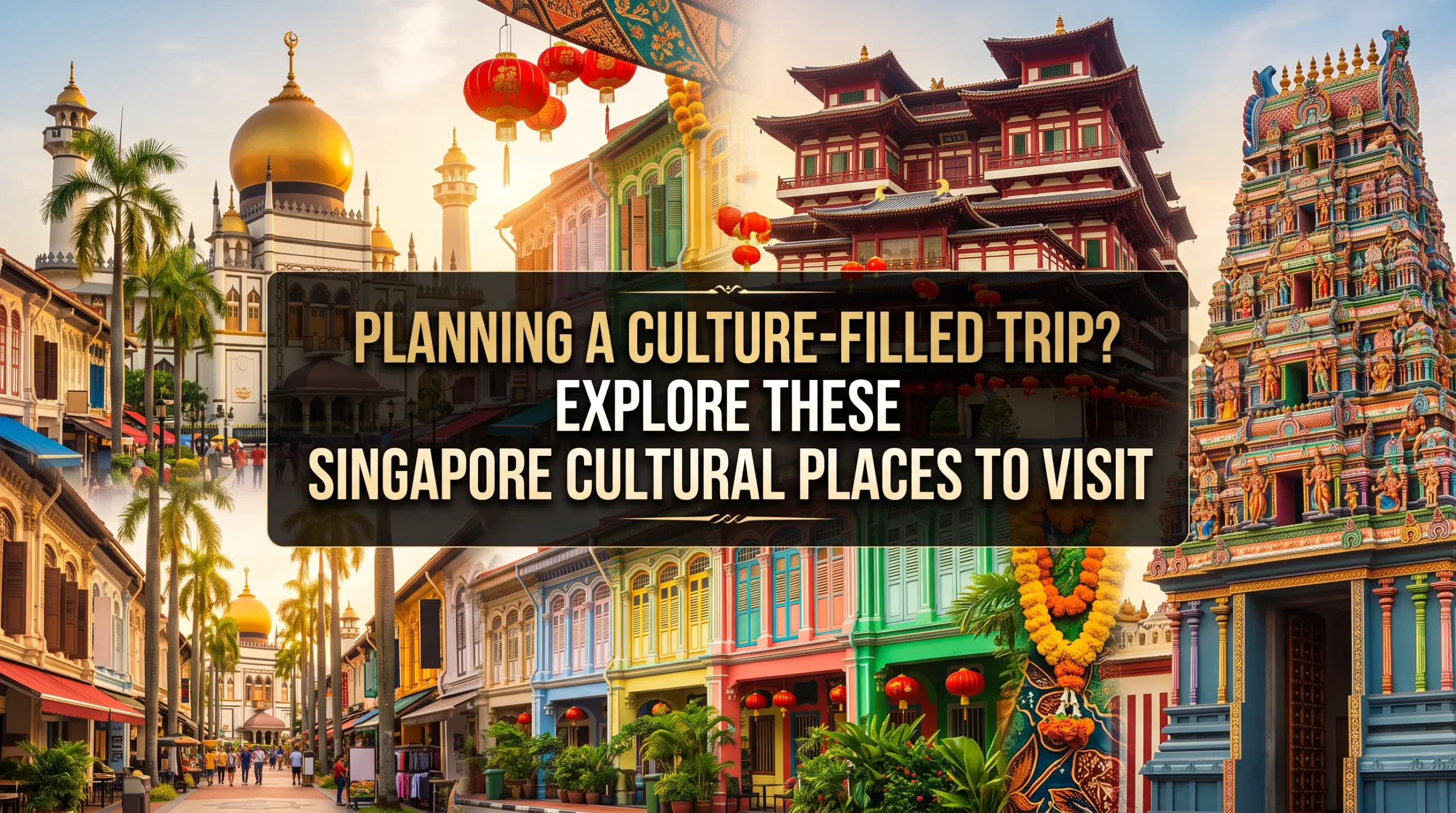
The top Singapore cultural places to visit fall into four groups. For temples and mosques, go to the Buddha Tooth Relic Temple, Thian Hock Keng, Sri Mariamman Temple and Sultan Mosque. For ethnic districts, pick Chinatown, Little India, Kampong Glam and the Peranakan streets of Katong. For museums and galleries, choose the Asian Civilisations Museum, the National Museum of Singapore, the Peranakan Museum and National Gallery Singapore. For food heritage, eat at a hawker centre, since Singapore’s hawker culture is on UNESCO’s intangible heritage list. A comparison table and an FAQ follow. Confirm hours, ticket prices and dress codes on the official sites before you go, because these change.
Singapore Is a Small Country With a Very Large Cultural Appetite
Singapore’s culture grew out of Chinese, Malay, Indian and Peranakan communities, among others, and most of their landmarks sit within walking or MRT distance of each other. You can pass through several cultures before your iced coffee melts, which in this climate takes about nine minutes. The picks below are organized by neighborhood and theme, and each comes with one practical tip. For general trip planning, the Singapore Tourism Board is the official starting point. If you also want to compare areas to stay in, our guide to Singapore’s best neighborhoods covers that.
1. Chinatown: Heritage Centre and Buddha Tooth Relic Temple
Chinatown is crowded with souvenir stalls, but the district has real depth if you sequence it properly. Start at the Chinatown Heritage Centre, which sits in restored shophouses and explains how early residents lived and worked. Walk to the Buddha Tooth Relic Temple next, then spend the rest of the afternoon looking at the shophouse facades.
Dress modestly for the temple, with shoulders and knees covered as a safe default, and check visiting hours on the temple’s official site before you set out. The lanterns are photogenic, but the air conditioning inside the museum spaces is the real attraction at 2 p.m.
2. Thian Hock Keng Temple: A Hokkien Temple With Serious Craftsmanship
Thian Hock Keng is a Hokkien temple on Telok Ayer Street and a gazetted national monument. It was built in the 19th century and is tied to the early Chinese seafarers and migrants who arrived on what was then the waterfront. The National Heritage Board and Roots.gov.sg hold the official founding and construction details, so check them if you need exact dates.
Look up at the roof decoration and across at the carved pillars, because the craftsmanship rewards slow looking. Afterward, walk along Telok Ayer Street, where other places of worship stand within a few minutes of each other, including Al-Abrar Mosque and the Nagore Durgha shrine. Few cities fit this much religious diversity into one street.
3. Sri Mariamman Temple: Singapore’s Oldest Hindu Temple
Sri Mariamman Temple is widely documented as the oldest Hindu temple in Singapore, and it sits on South Bridge Road in Chinatown. Its founding dates to the early 19th century, and the temple’s official site is the place to confirm the details and see festival information.
The tiered gopuram over the entrance is covered in sculpted figures, and it is worth a full minute of craning your neck. Remove your shoes before entering and dress modestly. Ask about photography rules at the entrance, since they can differ between areas. Yes, your socks will be judged by the shoe rack, so wear the nice pair.
4. Little India: Color, Spice and the Indian Heritage Centre
Little India covers temples, flower garland sellers, sari shops and restaurants within a few streets. Begin at the Indian Heritage Centre (see the National Heritage Board page) for context on the history of Indian communities in Southeast Asia. Then visit Sri Veeramakaliamman Temple on Serangoon Road, which is dedicated to the goddess Kali. Finish with lunch on a banana leaf.
Festival periods such as Deepavali bring street decorations and bigger crowds, which is wonderful for atmosphere and less wonderful for elbow room. Check dates in advance and decide which of those you want.
5. Kampong Glam and Sultan Mosque: Malay and Arab Quarter Charm
Masjid Sultan, with its golden dome, is the anchor of the Kampong Glam historic district. Visit the mosque outside prayer times, and check the Sultan Mosque website for current visitor policies and dress guidance. Rules for visitors can change around prayer times and religious periods.
After that, wander Arab Street and Haji Lane for textiles, cafes and street art. Haji Lane will test your willingness to buy a third scarf. A sensible limit is two, but nobody has ever enforced it.
6. Asian Civilisations Museum: The Region’s Story in One Riverside Building
The Asian Civilisations Museum, beside the Singapore River, focuses on the artistic and cultural heritage of Asia. Trying to see everything is how people end up sitting on a bench staring at a wall. Pick one thread instead, such as trade routes, textiles or Southeast Asian art, and follow it.
Special exhibitions rotate, so check the museum’s page on nhb.gov.sg for what is on and how tickets work. A museum is also a good plan for the afternoons when the weather has opinions.
7. National Museum of Singapore: The Country’s Story, Told Stylishly
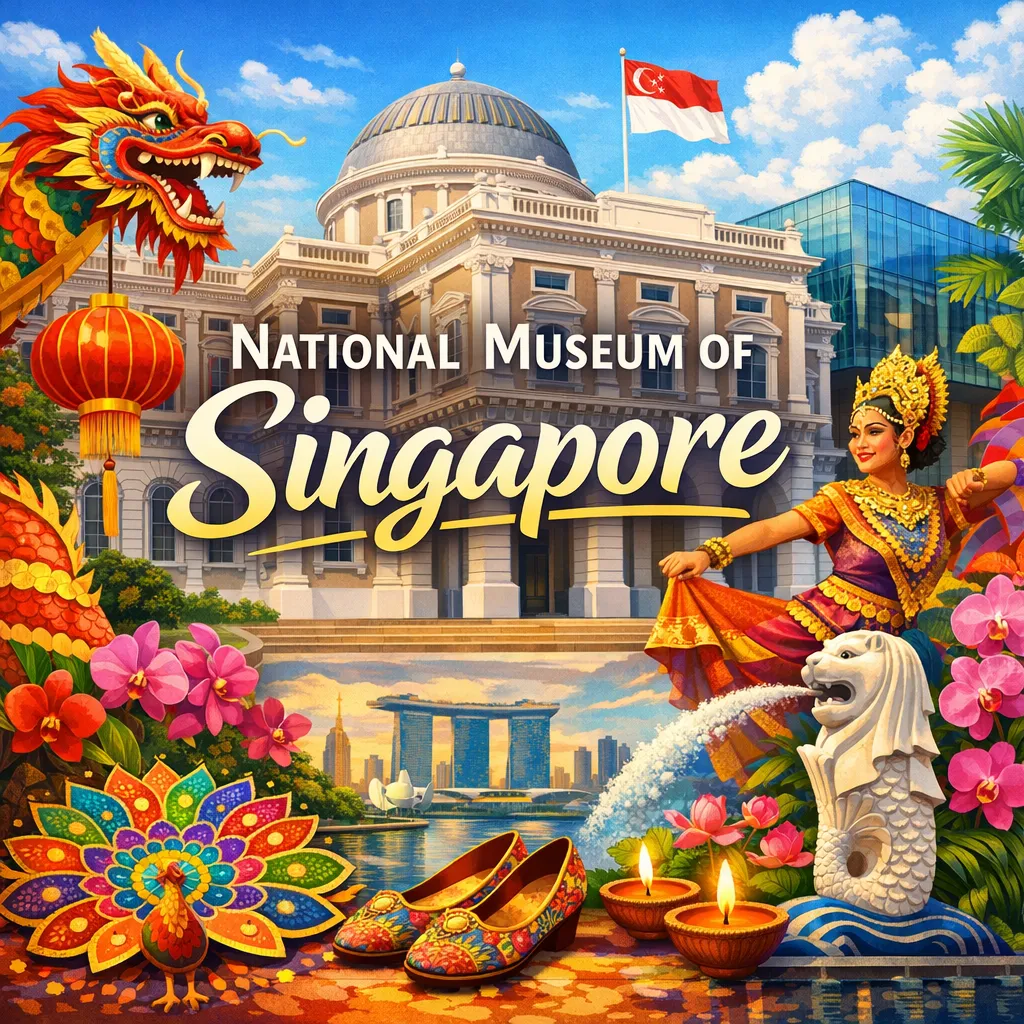
The National Museum of Singapore is housed in a neoclassical building on Stamford Road near Fort Canning, and its institutional roots go back to the 19th century. Use it as a day-one orientation stop. The history galleries give you a framework you can then match to the neighborhoods you visit later, so the shophouses in Chinatown and Kampong Glam stop being generic pretty buildings.
Galleries, tickets and festival programs change, so check the museum’s official page before you go.
8. Peranakan Heritage: The Peranakan Museum and Katong’s Colorful Shophouses
Peranakan refers to the descendants of early immigrants, often Chinese, who settled in Southeast Asia and blended their traditions with local Malay culture. The result is a distinctive mix of language, food, fashion and decor. The Peranakan Museum on Armenian Street reopened after a major renovation, so confirm current hours and ticketing with the National Heritage Board. Its collections include beadwork, clothing and household items.
For the living version, head east to Katong and Joo Chiat. Painted shophouses line the streets, and local cafes and shops sell kueh and Peranakan dishes. The tiles are so pretty you may be tempted to redecorate your kitchen.
9. Hawker Centres: Eating Your Way Through UNESCO-Recognized Culture
Singapore’s hawker culture was inscribed on UNESCO’s Representative List of the Intangible Cultural Heritage of Humanity in December 2020. The listing recognizes hawker centres as community dining rooms where different culinary traditions share one space.
Maxwell Food Centre and Lau Pa Sat are two easy places to start. Order from several stalls to taste different traditions in one sitting, and plan a nap afterward. You may see tissue packets left on tables, a local way of reserving a seat while someone queues for food. Do not move a packet unless you enjoy conflict. For more on how hawker centres work for visitors, read our guide to what to expect at Singapore hawker centers.
10. National Gallery Singapore: Southeast Asian Art in Historic Buildings
National Gallery Singapore occupies the former Supreme Court and City Hall buildings and focuses on Singapore and Southeast Asian art. It opened in 2015, and the official site lists current exhibitions.
Choose one wing or one featured exhibition rather than attempting everything. Afterward, step outside for photos of the building from the Padang side. Ticket tiers vary, and some exhibitions are priced separately, so look before you queue.
A Realistic Way to Combine These by Neighborhood
Grouping by area saves more energy than any other planning move in this climate.
-
Chinatown day: Chinatown Heritage Centre, Buddha Tooth Relic Temple, Sri Mariamman Temple, then Thian Hock Keng and Telok Ayer Street. Eat lunch at Maxwell Food Centre.
-
Civic and museum day: Asian Civilisations Museum, National Gallery Singapore, then the National Museum of Singapore and the Peranakan Museum if you still have energy.
-
Little India and Kampong Glam day: Indian Heritage Centre and a banana leaf lunch, then Sultan Mosque and Haji Lane in the afternoon.
-
Katong half day: Joo Chiat and Katong for painted shophouses and Peranakan food, since this area sits apart from the others.
If you have only two days, merge the first two plans and skip Katong. If your budget is tight, our list of free places to visit in Singapore pairs well with the temple and neighborhood stops here.
Quick Comparison Table: Which Cultural Stop Fits Your Mood?
|
Place |
Area |
Cultural focus |
Best for |
Source to verify |
|---|---|---|---|---|
|
Chinatown Heritage Centre and Buddha Tooth Relic Temple |
Chinatown |
Chinese heritage and Buddhism |
First-timers wanting context plus a temple |
|
|
Thian Hock Keng Temple |
Telok Ayer |
Hokkien temple, early migrant history |
Architecture and history fans |
|
|
Sri Mariamman Temple |
Chinatown |
Hindu worship, gopuram sculpture |
Visitors interested in Hindu heritage |
|
|
Little India and Indian Heritage Centre |
Little India |
Indian communities, temples, food |
Food and festival lovers |
|
|
Sultan Mosque and Kampong Glam |
Kampong Glam |
Malay and Muslim heritage |
Photographers and shoppers |
|
|
Asian Civilisations Museum |
Singapore River |
Asian art, trade and cultures |
Rainy afternoons, art lovers |
|
|
National Museum of Singapore |
Fort Canning area |
National history and identity |
Day-one orientation |
|
|
Peranakan Museum and Katong |
Armenian Street and Katong |
Peranakan culture and food |
Those who want something less obvious |
|
|
Hawker centres |
Islandwide |
UNESCO-listed hawker culture |
Food-focused travelers |
|
|
National Gallery Singapore |
Civic District |
Singapore and Southeast Asian art |
Art and architecture lovers |
Hours, ticket prices and dress codes change, so confirm them on each linked site before you visit.
Final Thoughts
Singapore’s culture works best when you mix worship sites, museums and food in the same day and group stops by neighborhood to save travel time. Be respectful at religious sites, and check details with the official sources linked above. Bring comfortable shoes and an appetite, because both will be tested.
FAQ: Singapore Cultural Places to Visit
What are the best cultural places to visit in Singapore for first-timers?
Start with Chinatown, Little India and Kampong Glam for the main communities. Add the National Museum of Singapore for context and a hawker centre for food heritage.
How many days do you need to see Singapore’s main cultural attractions?
Three days covers most of this list at a comfortable pace, and two days works if you skip Katong and choose fewer museums. This is a planning judgment, not an official figure, so adjust for your own pace.
Which cultural districts are best for food and heritage together?
Little India and Katong are strong choices, since both combine heritage sites with restaurants and food shops. Chinatown also works if you add lunch at a nearby hawker centre. Our hawker centre guide for tourists helps with ordering.
What should I wear when visiting temples and mosques in Singapore?
Dress modestly, with shoulders and knees covered. You will often need to remove your shoes. Check each site’s own guidance, such as the Sultan Mosque page and the Sri Mariamman Temple site, since rules can vary.
Are Singapore’s cultural museums worth visiting on a rainy day?
Yes, since the Asian Civilisations Museum, National Museum of Singapore, Peranakan Museum and National Gallery Singapore are all indoors and air-conditioned. Check the National Heritage Board for current exhibitions and ticketing.
Is Singapore’s hawker culture really UNESCO recognized?
Yes. UNESCO inscribed it on the Representative List of the Intangible Cultural Heritage of Humanity in December 2020, as documented on the UNESCO page.
What is the best time of year to visit for cultural festivals?
It depends on the festival, since dates for events such as Chinese New Year and Deepavali shift each year. The Singapore Tourism Board lists current events, so check it against your travel dates.