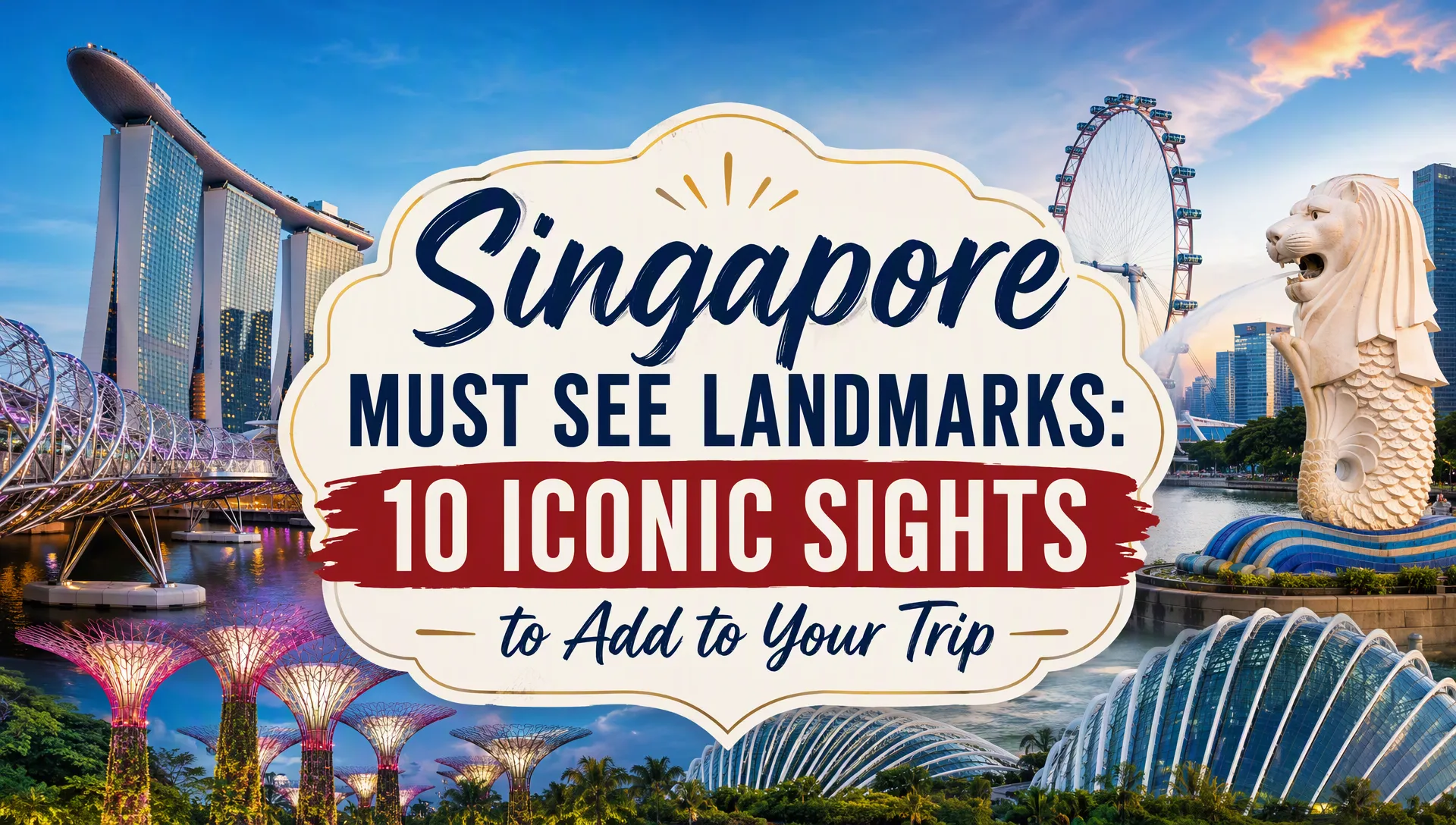
Singapore is compact enough to make landmark-hopping realistic, but tropical heat, timed tickets, and the inconvenient fact that airports do not sit beside heritage districts still reward a little planning. Treat this as a menu of skyline icons, green spaces, civic architecture, and living religious sites, not a dare to schedule 14 attractions before lunch.
Main Highlights
Build each day around one or two major attractions, then add nearby food, museums, waterfront walks, or neighborhood stops instead of zigzagging across Singapore. Reserve timed or ticketed experiences first, and use the official links below to confirm current hours, access rules, prices, and special events. Some of the best city views are free from promenades and public spaces, so a memorable day does not require collecting observation-deck tickets like trading cards.
At-a-Glance Landmark Planning Table
|
No. |
Landmark |
Best reason to go |
Area |
Planning note |
Official source |
|---|---|---|---|---|---|
|
1 |
Marina Bay Sands and SkyPark |
Elevated city, bay, and garden views |
Marina Bay |
Reserve ahead for preferred times and check entry conditions |
|
|
2 |
Gardens by the Bay |
Supertrees, conservatories, and futuristic landscaping |
Marina Bay |
Outdoor areas and ticketed conservatories offer different experiences |
|
|
3 |
Merlion Park |
Classic Singapore photo stop with waterfront skyline views |
Marina Bay |
Best treated as part of a promenade walk, not a full attraction |
|
|
4 |
Singapore Flyer |
Slow, enclosed panoramic ride |
Marina Bay |
Check operating details and ticket choices before visiting |
|
|
5 |
Jewel Changi Airport |
Indoor Rain Vortex and garden setting |
Changi Airport |
Fit it around arrival, departure, or a long layover |
|
|
6 |
Singapore Botanic Gardens |
UNESCO-listed gardens and a slower-paced green escape |
Tanglin |
Allow time to wander rather than treating it as a quick photo stop |
|
|
7 |
Buddha Tooth Relic Temple and Museum |
Chinatown religious heritage and detailed architecture |
Chinatown |
Respect worship, dress guidance, and photography rules |
|
|
8 |
Sri Veeramakaliamman Temple |
Striking Hindu temple architecture in Little India |
Little India |
Follow entry and photography rules, especially during worship |
|
|
9 |
Sultan Mosque |
Golden-domed focal point of Kampong Gelam |
Kampong Gelam |
Visitor access may vary around prayer times |
|
|
10 |
National Gallery Singapore |
Southeast Asian art inside landmark civic buildings |
Civic District |
A strong indoor option during midday heat or rain |
10 Singapore Must-See Landmarks
1. Marina Bay Sands and the SkyPark Observation Deck
What makes it iconic: Marina Bay Sands is the skyline structure most visitors recognize before they can identify the skyline itself. Its SkyPark Observation Deck provides elevated views across the city, Marina Bay, and Gardens by the Bay, making it a high-impact choice for travelers who want one major panorama rather than a long list of minor lookouts.
Who will enjoy it most: First-time visitors, architecture fans, photographers, and anyone who wants a dramatic overview before navigating the city at street level. Sunset can be especially appealing, although it is also a popular time, so the experience may require more planning than a casual stroll.
Practical tip: Book in advance if you have a preferred time slot, and check current entry details through the official SkyPark page. The deck is a paid experience, so travelers on a tighter budget may prefer the free waterfront views first and decide later whether the elevation is worth the ticket.
Nearby pairing: Walk the Marina Bay waterfront before or after your visit, then continue to Gardens by the Bay in the evening. This is one of Singapore’s easiest landmark combinations, with no need to turn it into a standalone expedition involving three train transfers and a damp shirt.
2. Gardens by the Bay
What makes it iconic: Gardens by the Bay combines elaborate horticulture with conspicuously futuristic design. The Supertree Grove is the most recognizable outdoor feature, while the conservatories offer enclosed displays that make a useful retreat when the weather becomes less “tropical vacation” and more “portable steam room.”
Who will enjoy it most: Families, photographers, architecture enthusiasts, garden lovers, and anyone who appreciates air conditioning as a cultural institution. It works well for both a brief scenic stop and a longer visit.
Practical tip: Separate the free outdoor experience from the ticketed indoor conservatories when planning. You can visit the Supertree Grove and surrounding outdoor areas without necessarily committing to every attraction. Check the official Gardens by the Bay website for conservatory tickets, events, operating information, and any changes to access.
Nearby pairing: Combine it with Marina Bay Sands, the waterfront, or an evening meal in the Marina Bay area. Early mornings suit a quieter garden walk; evenings are useful for visitors who want cooler temperatures and illuminated city scenery.
3. Merlion Park
What makes it iconic: The Merlion, Singapore’s half-lion, half-fish national symbol, is a small landmark with oversized recognition. It is less an all-day destination than a waterfront photo stop with clear views across Marina Bay, but that is precisely why it fits so easily into a first-time itinerary.
Who will enjoy it most: Visitors who want the classic Singapore photograph, casual walkers, and travelers building a Marina Bay route without adding another ticketed attraction.
Practical tip: Visit in the morning if you prefer a less punishing outdoor walk, or after dark to see the illuminated skyline. Crowds can vary by season, time, and nearby events, so approach it as a flexible stop rather than a carefully timed private audience with a mythical statue.
Nearby pairing: Continue along the waterfront promenade toward the Esplanade or the Fullerton area. The Singapore Tourism Board’s Merlion Park guide provides visitor context and location information.
4. Singapore Flyer
What makes it iconic: The Singapore Flyer offers a slow aerial view from enclosed capsules, a notably different experience from an observation deck or outdoor waterfront stroll. It is designed for taking in the city gradually, rather than sprinting from one photo angle to the next.
Who will enjoy it most: Multigenerational groups, visitors who prefer a seated experience, and travelers who want panoramic views with weather shelter. It can also be a sensible alternative for those who find open-air heights less appealing.
Practical tip: Compare it with the SkyPark before booking. Choose the Flyer if you want a gentler, enclosed ride; choose the SkyPark if the appeal is being high above the city on a major architectural landmark. Confirm current operating details and ticket options on the official Singapore Flyer website.
Nearby pairing: Add it to a wider Marina Bay day with Gardens by the Bay or the waterfront. Avoid treating both major viewpoints as mandatory unless aerial views are genuinely a priority for your group.
5. Jewel Changi Airport and the HSBC Rain Vortex
What makes it iconic: Jewel Changi Airport is a mixed-use airport complex centered on the HSBC Rain Vortex, an indoor waterfall surrounded by gardens, dining, shopping, and attractions. It gives an arrival or departure day more visual interest than the usual ritual of locating a power outlet and wondering whether boarding has started.
Who will enjoy it most: Travelers on a long layover, families, architecture fans, and visitors who have time before a flight. It is also a practical option for people arriving early and not yet ready to begin a full city itinerary.
Practical tip: Do not force Jewel into a packed city-center sightseeing day solely to complete a list. It makes the most sense around flight logistics. Allow a generous buffer before departure, consider luggage arrangements if needed, and check current attraction and access details on the official Jewel Changi Airport website.
Nearby pairing: Pair it with your arrival, departure, or layover rather than another landmark district. Jewel is an attraction in its own right, but it is not conveniently adjacent to Marina Bay, Chinatown, or Little India.
6. Singapore Botanic Gardens
What makes it iconic: The Singapore Botanic Gardens offers a more spacious, historical counterpoint to Marina Bay’s highly engineered greenery. It is Singapore’s first UNESCO World Heritage Site, a designation confirmed by UNESCO’s listing, and its broad landscape rewards visitors who slow down.
Who will enjoy it most: Nature lovers, walkers, families, and travelers who need an unhurried morning between museum visits, food stops, and skyline photos. It also suits returning visitors who have already done the major Marina Bay circuit.
Practical tip: This is not a place to rush in, photograph one plant, and flee toward the nearest train. Give yourself time to stroll and choose the parts of the grounds that interest you most. Use the National Parks Board’s Singapore Botanic Gardens page for maps, garden access information, and details on any ticketed areas.
Nearby pairing: Make it a relaxed morning or half-day plan, then move toward Orchard Road or another nearby dining area. It is better as a deliberate slower stop than as one more checkbox in an overstuffed afternoon.
7. Buddha Tooth Relic Temple and Museum
What makes it iconic: This prominent Chinatown landmark is known for its elaborate architecture and its role as a living Buddhist religious site. Its location makes it an easy cultural anchor for a Chinatown walk, but its significance deserves more care than a rapid doorway photograph.
Who will enjoy it most: Visitors interested in religious architecture, Chinatown heritage, and cultural sites that remain active parts of community life.
Practical tip: Dress and behave respectfully, follow posted photography guidance, and do not assume every space is available during religious activities. The Buddha Tooth Relic Temple and Museum website is the best place to verify current visitor guidance and opening information before you go.
Nearby pairing: Combine it with Chinatown’s markets, food options, and heritage streets. If you want to add the National Gallery Singapore on the same day, leave enough time for transport and avoid scheduling both as rushed, five-minute stops.
8. Sri Veeramakaliamman Temple
What makes it iconic: Sri Veeramakaliamman Temple is one of Little India’s most visually striking landmarks, particularly for its richly ornamented exterior. It is a compelling stop for visitors interested in Hindu temple design and the neighborhood’s cultural life.
Who will enjoy it most: Architecture enthusiasts, culture-focused travelers, and anyone exploring Little India beyond a single meal or shopping stop.
Practical tip: Etiquette matters. Follow instructions for clothing, footwear, entry, and photography, particularly during worship and festival periods. Check the official Sri Veeramakaliamman Temple website close to your visit for current information.
Nearby pairing: Build a Little India walk around the temple, neighborhood food, shops, and street scenes. This area works best at a strolling pace, with time to notice details rather than treating every block as an obstacle between landmarks.
9. Sultan Mosque
What makes it iconic: Sultan Mosque is the visual focal point of Kampong Gelam, recognizable for its golden dome and prominent place in Singapore’s historic Muslim district. The surrounding streets add context that a quick exterior photo cannot provide.
Who will enjoy it most: Visitors interested in religious architecture, heritage neighborhoods, textiles, food, and street photography. It is also a strong choice for travelers who want a cultural district rather than another skyline viewpoint.
Practical tip: Sultan Mosque is an active mosque, so visitor access and etiquette can vary around prayer times and religious observances. Consult the official Sultan Mosque website before visiting, and follow any instructions provided on arrival.
Nearby pairing: Walk Arab Street and Haji Lane before or after your visit. The neighborhood is compact enough to explore on foot, though the heat may make a café stop feel less like a luxury and more like sound strategic judgment.
10. National Gallery Singapore
What makes it iconic: National Gallery Singapore occupies the restored former Supreme Court and City Hall buildings, so the architecture is part of the attraction before you see a single artwork. Its collections and exhibitions focus on Singaporean and Southeast Asian art, giving visitors a useful cultural frame for the city beyond its contemporary skyline.
Who will enjoy it most: Art lovers, architecture fans, history-minded visitors, and anyone seeking an indoor landmark during midday heat or sudden rain.
Practical tip: Set aside enough time to appreciate both the galleries and the buildings. Check exhibitions, admission options, visitor hours, and current programming through the official National Gallery Singapore website.
Nearby pairing: Explore the Civic District, then walk toward the Padang, the Esplanade, or Marina Bay. It pairs particularly well with a late-afternoon waterfront stroll after a cooler indoor visit.
How to Build a Landmark Day Without Spending It in Transit
The easiest first-time cluster is Marina Bay: Marina Bay Sands, Gardens by the Bay, Merlion Park, and the Singapore Flyer are close enough to combine thoughtfully. Do not assume you need all four. A practical day might include Gardens by the Bay, a waterfront walk past Merlion Park, and either the SkyPark or Singapore Flyer.
For a culture-focused day, pair Chinatown and the Civic District. Start at Buddha Tooth Relic Temple, eat in Chinatown, then continue to National Gallery Singapore for art and historic architecture. This combination balances outdoor neighborhood time with a useful indoor stop.
For heritage streets and religious landmarks, combine Little India and Kampong Gelam. Sri Veeramakaliamman Temple and Sultan Mosque are in separate districts, but they make more sense together than either does with a rushed Marina Bay detour. Leave room for food, shops, and unplanned pauses, because neighborhoods are not museums with a single exhibit label.
Treat Jewel Changi Airport as part of flight logistics, not a compulsory city-center detour. Treat the Singapore Botanic Gardens as a slower morning or half-day destination. Both are rewarding, but neither needs to be squeezed into a day already dominated by timed tickets.
A quick decision guide:
-
Choose Marina Bay for first-time skyline views and headline architecture.
-
Choose Chinatown, Little India, and Kampong Gelam for heritage, food, and religious architecture.
-
Choose the Botanic Gardens for calm, walking, and green space.
-
Choose the National Gallery Singapore for art, civic architecture, and a weather-proof cultural stop.
Before leaving your hotel, check transport routes, weather, accessibility needs, timed-entry requirements, and any festival, prayer, or event schedules. Singapore is efficient, but even efficient cities cannot negotiate with thunderstorms, holiday crowds, or a reservation you forgot was for 2:00 p.m.
Final Thoughts
Singapore’s most rewarding landmark itinerary mixes its headline skyline with gardens, heritage districts, and cultural institutions. You do not need to see all 10 sights to have a strong trip; choosing a few that fit your interests and geography produces a much less rushed experience. The best Singapore photo is rarely improved by arriving overheated, late, and carrying three unnecessary attraction tickets.
FAQ
Which Singapore landmarks are best for first-time visitors?
Start with a Marina Bay cluster: Gardens by the Bay, Merlion Park, and either Marina Bay Sands SkyPark or the Singapore Flyer. Choose the SkyPark for a major elevated viewpoint and the Flyer for a slower, enclosed panorama.
How many days are needed to see these 10 landmarks?
You could sample several in two or three well-planned days, especially by grouping nearby sights. A longer stay allows a more relaxed pace, with time for neighborhoods, meals, museums, and weather adjustments.
Which landmarks are free to visit?
Public waterfront areas around Merlion Park and Marina Bay are free to access, as are outdoor portions of Gardens by the Bay. Ticketed attractions may include observation decks, conservatories, rides, exhibitions, or special areas. Confirm current terms directly with each official attraction before visiting.
What should visitors wear to temples and mosques?
Wear modest, respectful clothing and follow each site’s posted rules. Requirements can vary for footwear, photography, covered shoulders or legs, and access during worship, so check official guidance before arrival.
What is the best time to visit Singapore landmarks?
Early mornings and evenings are generally more comfortable for outdoor landmarks. Weather, crowd levels, operating hours, and special events vary, so verify details shortly before your travel date through the official visitor sites.