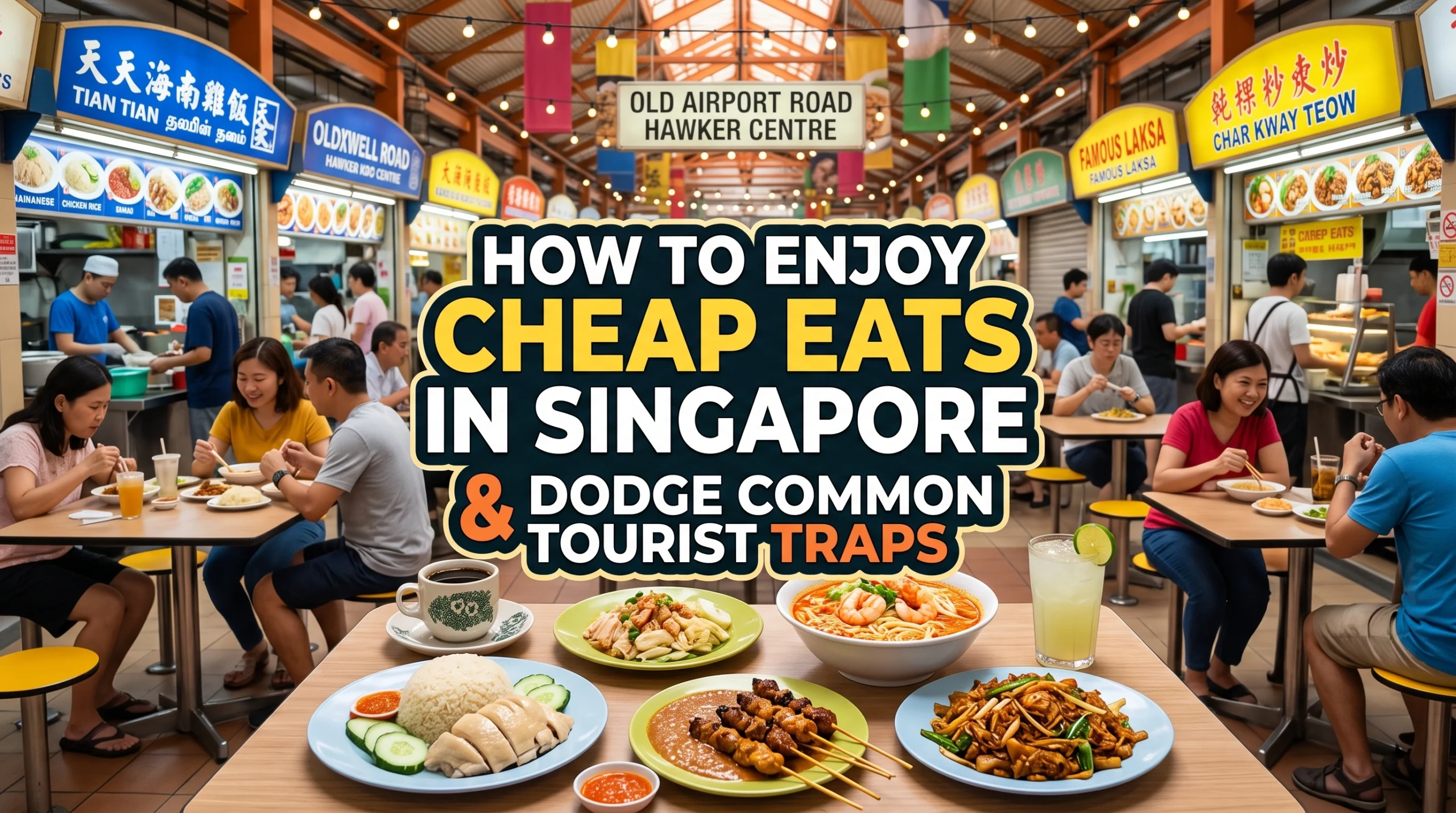
Here for the food and the vibes, not the bill shock. Singapore can be pricey if you stick to glossy malls and tourist menus, but it is also a paradise for cheap, amazing meals. The secret is simple. Eat where locals eat. Plan smart. Skip the common traps.
This guide shows you how to find real value at hawker centers and neighborhood spots. You will learn what to look for at the stall, how to read the scene, and how to stretch your budget with public transport. We will also point out warning signs of tourist traps, plus easy ways to avoid hidden fees.
Ready to eat well and spend less while seeing more of the city. Here are the key takeaways.
Key Takeaways
-
Visit hawker centers for affordable, authentic meals. They offer a wide variety of dishes at prices ranging from SGD 3 to 10, making them the best choice for budget-conscious travelers.
-
Avoid tourist traps by seeking out local favorites. Look for busy stalls with long queues and ask locals for recommendations to find the best food at reasonable prices.
-
Plan your meals around public transport routes. Use the MRT and buses to access diverse neighborhoods, allowing you to enjoy cheap eats while exploring Singapore’s vibrant culture.
You can easily find cheap, authentic meals in Singapore at hawker centers. Locals choose these spots for their affordability and flavor. The majority, 83%, visit hawker centers weekly, while tourists often overspend by dining at expensive restaurants in shopping malls or tourist areas.
|
Venue |
Percentage of Regular Users |
|---|---|
|
Hawker Centers |
83% (at least once a week) |
|
Coffeeshops |
35.5% |
|
Food Courts |
22.8% |
Tourists miss out on local flavors by falling into cheap eats tourist pitfalls Singapore. You should embrace local food culture and plan your route to maximize savings.
Cheap Eats Tourist Pitfalls Singapore
Singapore offers a vibrant food scene where you can enjoy authentic flavors without breaking the bank. However, many visitors fall into cheap eats tourist pitfalls Singapore by misunderstanding the differences between dining options, overlooking hidden gems, or failing to plan for local conditions. By understanding how to navigate these common mistakes, you can maximize your experience and savings while enjoying some of the best food the city has to offer.
Hawker Centers vs Restaurants
You will notice a significant difference in both cost and experience when comparing hawker centers to restaurants in Singapore. Hawker centers provide a casual, bustling atmosphere where you can sample a wide variety of dishes at a fraction of the price you would pay in a restaurant. The following table highlights the average meal prices across different types of dining venues:
|
Type of Dining |
Average Meal Price (SGD) |
|---|---|
|
Hawker Centers |
3 – 10 |
|
Casual Restaurants |
15 – 25 |
|
Café Brunch |
20 – 35 |
|
Hotel Dining |
40+ |
You can see that hawker centers offer the most affordable meals, making them the top choice for anyone looking to avoid cheap eats tourist pitfalls Singapore. While restaurants may provide a more formal setting, the quality of food at hawker centers often matches or even surpasses that of pricier venues. Many stalls are run by experienced vendors who have perfected their recipes over decades. The casual environment encourages you to try new dishes and interact with locals, giving you a richer cultural experience.
Tip: Skip the touristy restaurants in shopping malls and head to a neighborhood hawker center for a more authentic and cheap meal.
Michelin-Quality on a Budget
You do not need to spend a fortune to enjoy world-class food in Singapore. Several hawker stalls have earned Michelin stars or Bib Gourmand awards, proving that high-quality cuisine is accessible to everyone. These award-winning stalls serve up signature dishes that attract both locals and savvy travelers. Some of the most notable options include:
-
Hill Street Tai Hwa Pork Noodle (One Star) at Tai Hwa Eating House, famous for Bak Chor Mee.
-
Fei Fei Roasted Noodle (Bib Gourmand) in Yuhua Village Market, known for roast meats.
-
Tiong Bahru Hainanese Boneless Chicken Rice (Bib Gourmand) at Tiong Bahru Market.
-
Tian Tian Hainanese Chicken Rice (Bib Gourmand) at Maxwell Food Centre.
-
Delhi Lahori (Bib Gourmand) at Tekka Centre, specializing in Indian and Pakistani cuisine.
-
Lian He Ben Ji Claypot Rice (Bib Gourmand) at Chinatown Complex Food Centre.
-
Nam Sing Hokkien Fried Mee (Bib Gourmand) at Old Airport Road Food Centre.
-
Tai Wah Pork Noodle (Bib Gourmand) at Hong Lim Market.
By seeking out these stalls, you avoid common cheap eats tourist pitfalls Singapore, such as assuming only expensive restaurants offer top-tier food. You also get to enjoy a diverse range of flavors, from classic chicken rice to spicy claypot dishes, all at a price that fits any budget.
Hygiene and Safety Standards
You might worry about cleanliness when eating at hawker centers, but Singapore enforces strict hygiene and safety standards. Every stall must meet licensing requirements, and cleanliness grades are displayed prominently. The table below outlines key practices that keep hawker centers safe and pleasant:
|
Standard/Practice |
Description |
|---|---|
|
Tray Return Requirement |
Diners must return trays and crockery after eating to maintain cleanliness. |
|
Enforcement of Tray Return |
Stricter enforcement began in 2022, with warnings or fines for non-compliance. |
|
Hygiene Licensing |
Stalls must meet hygiene standards to operate, with grades displayed based on cleanliness scores. |
|
Grading System |
A score of 85% or higher earns an ‘A’, while a score of 40-49% results in a ‘D’. |
The government has introduced policies to improve hygiene and sustainability, including mandatory tray return and regular inspections. Enforcement officers educate diners and issue penalties for repeat offenders. These measures ensure you can enjoy cheap eats tourist pitfalls Singapore without compromising on safety or cleanliness.
Note: Always check the hygiene grade displayed at each stall. Choosing stalls with an ‘A’ or ‘B’ rating helps you avoid any unpleasant surprises.
Many tourists make the mistake of sticking to well-known hawker stalls in central areas, missing out on authentic experiences in residential neighborhoods. You should explore local coffee shops and mamak shops, which offer unique dishes beyond the usual tourist fare. Another common pitfall is underestimating the tropical heat or failing to plan transportation, which can lead to unnecessary expenses or discomfort. By preparing ahead and venturing beyond the obvious choices, you can truly enjoy the best of Singapore’s cheap eats tourist pitfalls Singapore.
Spotting Tourist Traps in Singapore
You want to enjoy the best of Singapore without falling into expensive traps. Many visitors arrive with excitement, eager to sample local food and explore famous landmarks. You may notice that the city offers a wide range of dining options, from hawker centers to upscale restaurants. However, not every venue delivers value or authenticity. Some places target tourists with high prices, flashy menus, and aggressive marketing. You can avoid these pitfalls by learning how to spot the signs of a tourist trap and making informed choices.
Singapore’s vibrant neighborhoods invite you to discover unique flavors and experiences. You will find that local favorites often provide better quality and lower prices than venues near major attractions. When you plan your meals and activities, you save money and enjoy genuine local culture. You should look for venues where locals gather, and avoid places that rely on gimmicks or pushy staff. By understanding the differences between authentic spots and tourist traps, you maximize your budget and create memorable experiences.
You may feel tempted to visit famous venues or signature restaurants. These places often appear in travel guides and social media posts. You should remember that popularity does not always mean quality or value. Many tourist traps charge premium prices for ordinary food or views. You can spot these venues by paying attention to their marketing tactics, menu design, and staff behavior. When you recognize the red flags, you make smarter choices and avoid unexpected costs.
Overpriced Venues and Signature Dishes
You will encounter many venues in Singapore that charge high prices for signature dishes or unique views. These places often attract tourists with promises of exclusive experiences. You should compare prices and value before deciding where to eat or visit. The table below shows how prices at tourist trap venues stack up against local favorites:
|
Venue |
Price (SGD) |
Description |
|---|---|---|
|
Marina Bay Sands SkyPark |
35 |
Offers a view of Singapore but considered overpriced for just the view. |
|
Singapore Flyer |
40 |
Provides a panoramic view but is shorter in duration and also deemed a poor value. |
|
LAVO Rooftop Bar |
30 |
Minimum spend for food and drinks while enjoying a similar view, considered a better value. |
|
Orchard Road |
N/A |
Known for luxury brands, not cheaper than other locations. |
|
Haji Lane |
N/A |
Offers a unique local shopping experience with boutique shops. |
|
New Bahru Mall |
N/A |
Features only Singapore homegrown brands for a unique shopping experience. |
|
One Fattened Calf Burger |
20 |
A local favorite burger, noted for its quality but considered expensive. |
You see that venues near famous landmarks often charge more for the same experience you can find elsewhere. You should seek out local markets and hawker centers for cheap food and authentic flavors. These spots offer better value and allow you to enjoy Singapore’s culture without overspending.
Tip: Ask locals for recommendations. They know where to find the best food at reasonable prices.
Red Flags for Tourists
You can spot tourist traps in Singapore by watching for certain signs. These venues often use tactics to attract visitors rather than locals. The table below highlights typical indicators:
|
Indicator |
Explanation |
|---|---|
|
Aggressive staff trying to lure customers |
Indicates desperation for customers rather than popularity. |
|
Laminated menus with many pictures |
Often targets tourists instead of locals. |
|
Theme restaurants mismatched with local culture |
Designed to appeal to tourists, focusing on novelty over authenticity. |
|
Aggressive marketing outside |
Suggests desperation to attract tourists rather than being popular with locals. |
You should avoid places where staff pressure you to enter or where menus feature excessive photos. Authentic venues in Singapore rely on reputation and word of mouth. You will find that local favorites have simple menus and attract steady crowds without flashy advertising.
Note: If you see a restaurant with empty tables during peak hours, it may not offer the best value or quality.
Avoiding Unexpected Costs
You can protect your budget by planning ahead and watching for hidden fees. Many tourist traps add service charges, minimum spend requirements, or inflated prices for basic items. You should check the menu for extra charges before ordering. You can also avoid paying for views or novelty experiences that do not add real value.
Follow these steps to avoid unexpected costs:
-
Review menus for hidden fees or minimum spend requirements.
-
Ask about service charges before ordering.
-
Choose venues where locals eat, especially in residential neighborhoods.
-
Use public transport to reach food spots away from tourist areas.
-
Bring a reusable water bottle to avoid paying for drinks.
You will enjoy Singapore more when you focus on authentic experiences and avoid unnecessary expenses. By spotting tourist traps and making smart choices, you keep your trip affordable and memorable.
Eat Like a Local in Singapore
You want to experience Singapore beyond the surface. Locals know that affordable food and authentic flavors come from hawker centers, not just big-name hawker stalls. Many visitors make mistakes by sticking to tourist hotspots or overlooking neighborhood gems.
You can avoid these mistakes and stretch your budget by learning how Singaporeans choose their meals, follow customs, and navigate the city efficiently.
Eating like a local means embracing the vibrant food culture, connecting with stall owners, and understanding the communal spirit that defines Singapore’s dining scene. You will discover that travel in Singapore is not just about sightseeing; it is about sharing meals, preserving culinary traditions, and making smart choices that keep your wallet happy.
Choosing the Best Stalls
Locals use several criteria to select the best hawker stalls. You should look for:
-
Popularity and long queues, which signal quality.
-
Reputation, especially stalls recognized by awards like the Michelin Guide.
-
Longevity, as stalls with decades of history often serve authentic flavors.
-
Quality ingredients and consistent taste.
Avoid mistakes by not chasing only big-name hawker stalls. Sometimes, hidden gems offer better food and value.
Local Customs and Etiquette
Understanding customs helps you avoid mistakes and enjoy your meal. The table below outlines key etiquette rules at hawker centers in Singapore:
|
Rule |
Description |
|---|---|
|
Return trays and crockery |
Diners must return trays and dishes after eating to maintain cleanliness. |
|
Clear tables |
Customers should clear their tables before leaving to help with turnover. |
|
Dispose of trash properly |
Proper disposal of waste is expected to keep the area tidy. |
|
Share tables |
It is common to share tables with strangers, especially during busy times. |
|
Queue properly |
Always join the queue from the back and be ready to order when it’s your turn. |
|
Tipping |
Tipping is not customary in Singapore, including at hawker centers. |
|
Payment methods |
Cash is widely accepted, along with mobile payment options. |
|
Respect stall owners |
Be polite and patient when ordering from stall owners. |
|
Photography etiquette |
Quick photos are fine, but avoid blocking queues and ask for permission when necessary. |
|
Cultural significance |
Hawker centers are important social spaces reflecting Singapore’s multicultural heritage. |
You will notice that eating is a cherished pastime in Singapore. Locals interact with stall owners to preserve culinary traditions and often share tables, making dining a social experience.
Pairing Meals with Low-Cost Activities
You can stretch your budget in singapore by pairing affordable meals with free or low-cost activities. Many neighborhoods offer both delicious food and unique experiences, making it easy to plan a day that satisfies your appetite and curiosity. When you explore beyond the usual tourist routes, you discover vibrant communities, hidden gems, and authentic local culture. This approach helps you avoid expensive attractions and crowded landmarks, giving you a more personal connection to the city.
Exploring Neighborhoods
Singapore’s diverse neighborhoods provide a feast for your senses. You find not only cheap eats but also colorful sights and cultural experiences. Consider these areas for your next outing:
-
Little India: Visit Tekka Centre for biryanis and dosas at wallet-friendly prices. The area bursts with vegetarian options and lively street art.
-
Chinatown: Sample hawker classics near the Buddha Tooth Relic Temple and Museum. Browse the Chinatown Street Market for souvenirs and learn about history at the Chinatown Heritage Centre.
You can enjoy a variety of dishes without overspending. Here’s what you might pay for popular meals:
|
Dish Type |
Price Range (SGD) |
|---|---|
|
Chicken Rice |
|
|
Laksa |
$5 to $7 |
|
Briyani |
$6 to $9 |
|
Satay (per stick) |
$0.70 to $1 |
|
Kopi / Teh |
$1.20 to $2 |
Visiting Parks and Cultural Sites
After a satisfying meal, you can walk off your food in one of singapore’s many parks or cultural sites. Gardens by the Bay offers free outdoor gardens, while the Southern Ridges provides scenic trails. You might visit the National Gallery or stroll through the Civic District to see historic buildings. These activities let you experience singapore’s beauty and history without straining your travel budget.
Tip: Plan your meals around public parks or museums to maximize your day and minimize transportation costs.
You can find cheap, authentic eats in singapore by visiting hawker centers and local markets. These spots offer dishes like Hainanese chicken rice, laksa, and dim sum at low prices. Plan your meals, explore neighborhoods, and keep notes of favorite stalls. Try new foods confidently and enjoy singapore’s vibrant food culture.
FAQ
What is the best way to find cheap food near popular landmarks in Singapore?
You can use local food apps or ask residents for recommendations. Hawker centers near popular landmarks often offer authentic meals at affordable prices.
How do I avoid tourist traps at popular tourist destinations in Singapore?
Look for places where locals eat. Avoid venues with aggressive marketing. Choose stalls with long queues for genuine value and taste.
Can I find value-for-money accommodation close to food hotspots in Singapore?
Yes, you can find value-for-money accommodation near major MRT lines. This gives you easy access to food centers across singapore.