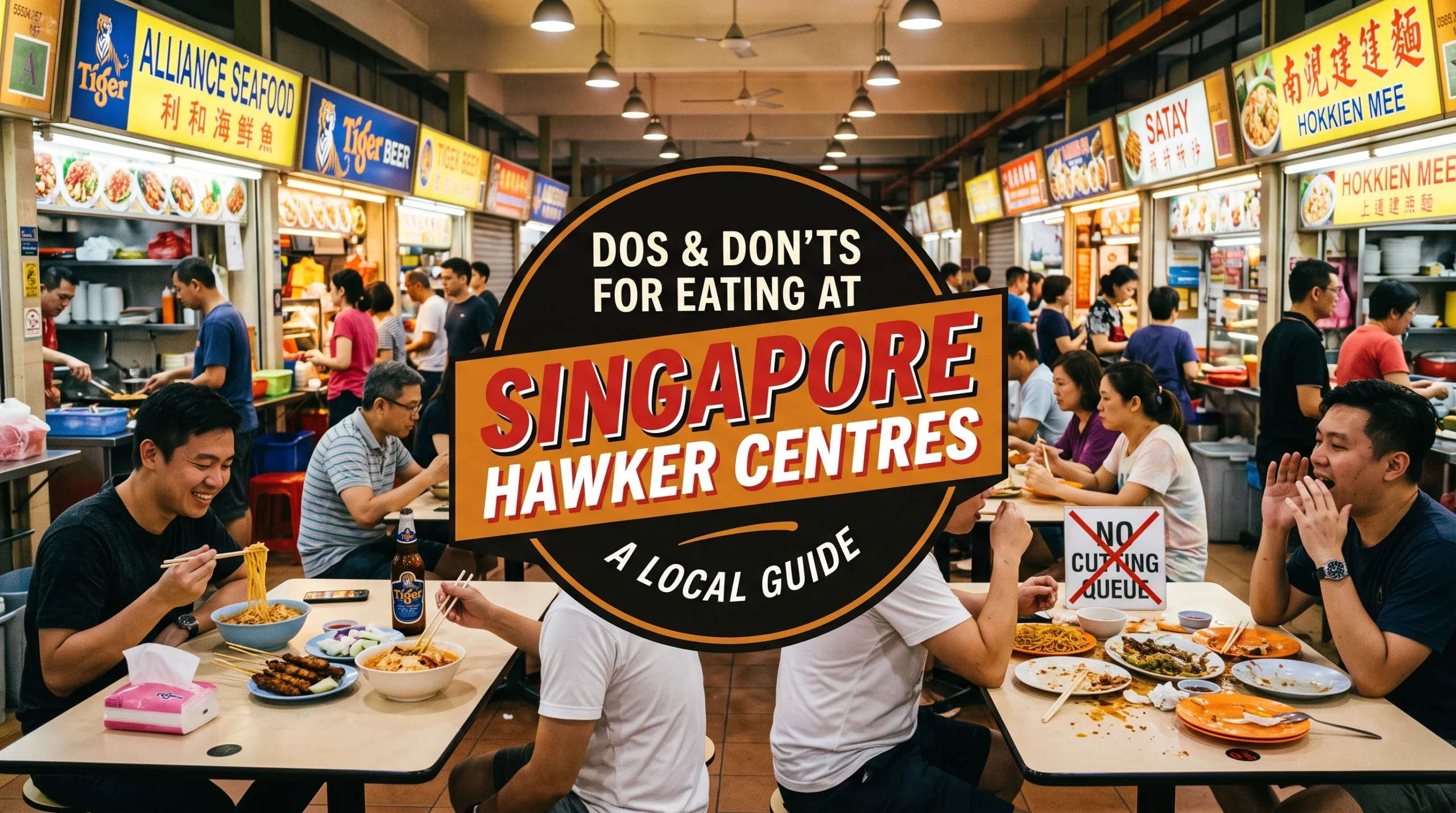
You are in Singapore, hungry, and the hawker centre is buzzing. Steam rises from woks. The queue snakes past a chicken rice stall. Seats fill fast. This is where the best local food lives, and where unspoken rules keep things moving. From reserving a seat with a tissue packet to sharing tables with a smile, small habits make a big difference. You will learn how to read a queue, place orders with confidence, choose payment that works, and clear your tray the right way. You will also pick up simple manners that locals appreciate. Follow these tips and you will eat well, save time, and fit right in.
Here are the key takeaways.
-
Understand the ‘chope’ system. Use a tissue packet to reserve your seat while you wait in line for food.
-
Practice good manners. Always ask before sitting at a shared table and speak politely to hawkers.
-
Keep the hawker centre clean. Clear your table and return your tray after eating to respect the next diner.
What Are Hawker Centres?
Communal Dining Spaces
You step into a hawker centre and instantly feel the buzz. These cooked food centres bring people together in a lively setting. Singapore’s hawker centres serve as communal dining spaces where diverse culinary offerings are available under one roof, allowing diners to share meals and experiences. The atmosphere is vibrant, especially during lunch hours, with a sense of community as people gather to enjoy food from various stalls.
You notice the ‘chope’ system in action. Diners use tissue packets to reserve seats.
An unspoken agreement among diners to ‘chope’ or reserve seats with a packet of tissue reflects the communal etiquette that has become part of Singapore’s dining culture, emphasizing respect and efficiency in these bustling spaces. You often share tables with strangers. This is normal and part of the dining experience. You get to enjoy food while connecting with others. Hawker centres are open-air, unlike most restaurants.
You find affordable meals and a wide variety of food options.
-
Hawker centres offer food at lower prices compared to restaurants.
-
They provide a wide range of food options, including local and international cuisines.
-
Hawker centres are typically open-air, contrasting with the air-conditioned environment of most restaurants.
Local Food Culture
Singapore’s hawker centres are more than just places to eat. They are cooked food centres that showcase the country’s multicultural dining scene.
-
There are over 110 hawker centres in Singapore today.
-
Hawker centres originated in the 1970s as a government initiative to organize street food vendors into hygienic public spaces.
-
In 2020, Singapore’s hawker culture was recognized by UNESCO as an Intangible Cultural Heritage, emphasizing its social and historical significance.
-
Hawker centres serve as living social spaces that promote multiculturalism and community identity.
-
The government built 135 hawker centres in the first two decades of independence, with a significant number established between 1974 and 1979.
You find dishes from different cultures. You taste Chinese, Malay, Indian, and Western food all in one place. Hawker centres reflect Singapore’s rich culinary heritage.
-
Hawker centres showcase a vibrant, multicultural street food scene.
-
They reflect Singapore’s rich culinary heritage through a variety of beloved dishes.
-
These centres contribute to evolving tastes and communal dining experiences.
-
Hawker culture is recognized by UNESCO, emphasizing its significance.
-
It reflects the nation’s evolving communal dining experiences.
-
Traditional food destinations continue to showcase Singapore’s culinary heritage.
You experience dining that is both casual and meaningful. Hawker centres help you understand the heart of Singapore’s food culture.
Arrival Tips
Navigating Crowds
You step into a hawker centre and see a sea of people. The busiest times hit during lunch, when everyone rushes in for a quick meal. You might feel overwhelmed by the crowd, especially if you visit at noon. Most locals know this, so they come early or wait until the rush passes. If you want to avoid the chaos, try arriving before noon or after 2 p.m. This gives you a better shot at finding a seat and enjoying your food in peace.
Tip: Walk around the centre before you decide what to eat. You get to see all the options and spot which stalls have the longest queue. A long line usually means the food is worth the wait.
You will notice that people use tissue packets to reserve seats. This is called “choping.” It helps you save a spot while you stand in the queue for your food.
Finding a Table
Finding a table can feel like a game. During peak hours, you might have to wait and watch for someone to leave. Many visitors bring a packet of tissues to mark their spot. If you see a table with a tissue packet, that means someone has already reserved it.
Here are some quick tips to help you grab a table:
-
Look for stalls with a long queue of locals. These usually serve the best dishes.
-
Bring tissues to reserve your seat while you wait in line.
-
Try to visit during off-peak hours for more choices and less waiting.
If you come with friends, have one person find a table while the others order. This teamwork makes things easier for everyone.
Seating and the ‘Chope’ System
How to Reserve a Seat
You walk into a hawker centre and spot a busy crowd. You want to make sure you get a seat before you order your food. In Singapore, people use the “chope” system to reserve a seat. This means you place a small item on the table to show that the seat is taken. The most common item is a tissue packet, but you might also see umbrellas, water bottles, or bags. Here’s a quick look at what people use:
|
Common Items Used for Reserving Seats |
|---|
|
Tissue packets |
|
Umbrellas |
|
Water bottles |
|
Bags |
To chope a seat, just place your item on the table or chair. People will know that the seat is reserved. This system works well because everyone understands the rule. You can relax and join the queue for your food, knowing your seat is safe.
Sharing Tables
Sometimes, every seat is taken, especially during lunch. You might need to share a seat with strangers. Don’t worry—this is normal. If you see an empty seat at a table, ask politely before sitting down. Most people will nod or smile to let you know it’s okay. Here are some things to remember:
-
Many people like to chope a seat first before queuing for food.
-
Some buy food first and then ask to share a seat later.
-
The chope system is an unspoken rule that gives you temporary ownership of the seat.
If you need a seat, look for tables with space and ask, “Is this seat taken?” Sharing a seat helps everyone enjoy their meal, even when the hawker centre is crowded. You might even make a new friend while sharing a seat!
Ordering Food
Choosing a Stall
You walk into a hawker centre and see rows of food stalls. The choices can feel endless. Many people look for long lines. In singapore, a queue often means the food is worth the wait. You might spot famous stalls like Tian Tian Hainanese Chicken Rice, Liao Fan Hawker Chan, or Tiong Bahru Char Kway Teow. Some centers, like Tiong Bahru Food Centre and Chinatown Complex, have well-known options. You can also find great satay at Lau Pa Sat or seafood at East Coast Lagoon. If you feel unsure, just follow the crowd. Locals know where to find the best food.
Placing Orders
Ordering food at a hawker centre is simple. First, join the queue at your chosen stall. When it’s your turn, place your order and pay. Some hawker stalls give you a buzzer, while others ask you to wait nearby. Once your food is ready, collect it along with any cutlery or sauces you need. Most hawker stalls use English, but you can point to the dish if needed. Remember to grab a drink from a nearby stall or wait for a drink seller to approach your table.
Tip: Start with one dish. Try more food after you finish, so you don’t order too much at once.
Customizing Dishes
You can often customize your meal at a hawker centre. Ask for extra vegetables or choose a vegetable-heavy dish. Many food stalls let you mix and match items to build a balanced meal. If you have dietary needs, check the table below for options:
|
Dietary Preference |
Options Available |
|---|---|
|
Vegetarian |
Rice and noodle dishes without meat, grilled fish |
|
Halal |
Halal-certified stalls available |
|
Adjustments for Spice |
Stalls can adjust chili levels on request |
Don’t be shy about asking for less spice or adding a side. Hawker food is all about enjoying your meal your way.
Hawker Centre Etiquette in Singapore
When you visit a hawker centre in Singapore, you step into a lively world where everyone shares space and enjoys great food. Following hawker centre etiquette in singapore helps you fit in and makes your meal more enjoyable. Let’s look at the key rules and habits that keep these places running smoothly.
Table Manners
You might notice that everyone follows certain unspoken rules at a hawker centre. Good table manners show respect for others and help keep the space pleasant for everyone. Here are some important habits to remember:
-
Always ask before you sit at a table with someone else. A simple “Is this seat taken?” goes a long way.
-
If you see a tissue packet or small item on a seat, someone has reserved it. Don’t move it or take the seat.
-
Speak politely to hawkers and thank them when you get your food. Many hawkers work long hours, so a smile or kind word means a lot.
-
Support hawker stalls by buying from them and showing appreciation for their hard work.
You also need to remember that hawker centre etiquette in singapore includes self-service. You order and collect your food directly from the stall. Service staff usually only clear trays, so don’t expect table service. After you finish eating, return your tray and utensils to the collection point. This keeps the area tidy and shows respect for the next diner.
Here’s a quick table of key etiquette rules you’ll see at every hawker centre:
|
Rule |
Description |
|---|---|
|
Seat reservation |
Locals reserve tables by placing a tissue packet or small item on the seat. |
|
Self-service |
Diners order and collect food directly from stalls; service staff only clear trays. |
|
Tray return |
Returning trays and utensils to the collection point after eating is mandatory. |
|
Payment |
Most stalls accept cash and contactless options such as NETS, GrabPay, or YouTrip. |
Tip: If you’re not sure what to do, just watch what locals do and follow their lead. You’ll pick up hawker centre etiquette in singapore quickly.
Noise and Cleanliness
Hawker centres can get noisy, but you should always try to keep your voice down. Loud conversations or shouting can disturb others who want to enjoy their food. If you’re with friends, talk at a normal volume. This helps everyone have a pleasant meal.
Cleanliness is a big part of hawker centre etiquette in singapore. You play a role in keeping the space clean and safe for everyone. Always clear your table after eating. Return your tray and utensils to the collection point. This simple act helps maintain hygiene and shows respect for the next person who will use the table.
Hygiene matters a lot in every hawker centre. Regular cleaning of kitchen exhaust systems helps control noise and keeps the air fresh. Good ventilation and clean surroundings make the dining experience better for you and everyone else. You’ll notice that staff work hard to keep things tidy, but you should do your part too.
Here’s what you can do to show respect and keep up with hawker centre etiquette in singapore:
-
Ask before sitting at a shared table.
-
Speak politely to hawkers and other diners.
-
Keep your voice down, especially during busy times.
-
Always clear your table and return your tray.
-
Support hawker stalls by being patient and understanding their challenges.
Note: Practicing good hygiene and manners at a hawker centre helps everyone enjoy their food in a clean and friendly space. You set a good example for others and help keep Singapore’s food culture strong. If you follow these simple steps, you’ll master hawker centre etiquette in singapore. You’ll enjoy your meal, make new friends, and help keep these unique dining spots welcoming for everyone.
After Your Meal
Clearing Your Table
You just finished a delicious meal at a hawker centre. Now, it’s time to clear your table. Don’t leave your plates, bowls, or cups behind. Other diners want a clean spot to enjoy their food. Grab your used dishes and bring them to the nearest tray return station. You’ll see signs or arrows pointing you in the right direction. If you’re not sure where to go, just look around—most hawker centres have these stations near the exits or in the middle of the dining area.
Tip: Wipe up any spills or crumbs with a tissue before you leave. This small act shows respect for the next person.
Leaving a tidy table helps the cleaning staff and keeps the hawker centre pleasant for everyone. You set a good example for others when you take care of your own mess.
Returning Trays
You might notice signs that remind you to return your tray. This is not just a suggestion—it’s a rule in many hawker centres. When you return your tray, you help keep the place organized and safe. Trays left on tables can block seats or even cause accidents. Pick up your tray and place it on the rack or conveyor belt at the tray return station.
Here’s a quick checklist for after your meal:
-
Collect all your used dishes and utensils.
-
Return your tray to the proper station.
-
Check the table for spills or trash.
Following these steps makes you a considerate hawker centre visitor. You help keep Singapore’s food culture strong and welcoming for everyone.
Payment and Practical Tips
Cash and Small Bills
When you visit a hawker centre in Singapore, you notice that cash is still handy for small purchases. Many hawker stalls accept cash, even though digital payments are becoming more common. You see the Singapore dollar everywhere, but some vendors in tourist spots might take US dollars or other foreign currencies. Cash usage is low, making up only 13% of in-person transactions, and it will likely drop even more in the coming years. Still, hawker stalls often prefer cash for quick food payments. You should bring small bills and coins to make things easier.
Large notes can slow down the queue, especially during busy lunch hours.
-
Cash is accepted at most hawker stalls.
-
Small bills and coins help speed up payment.
-
Digital options like NETS, GrabPay, and YouTrip are available at some stalls.
-
Singapore dollar is the main currency, but tourist areas may accept foreign money.
Tip: Keep a few small notes in your wallet. You avoid delays and make your hawker centre experience smoother.
Language and Communication
You hear a mix of languages at every hawker centre. Singapore’s multicultural identity shines through in the food and the way hawker vendors talk to customers. Mandarin, Malay, and Tamil are common, and English bridges the gap for non-local visitors. Many hawker stalls use simple English or gestures to help you order food. Sometimes, foreign-born workers add even more languages and dialects to the mix. If you feel unsure, just point to the food you want or use basic words. Hawker vendors are friendly and will help you get your meal.
-
Mandarin, Malay, and Tamil are spoken at hawker centres.
-
English is used to communicate with tourists and non-local customers.
-
Foreign-born hawker workers may speak other languages or dialects.
-
Pointing or using simple words helps you order food easily.
Note: Don’t worry about language barriers. Hawker vendors want you to enjoy your food and will do their best to help.
-
Respect the chope system and always clear your table.
-
Speak politely to hawkers and other diners.
Try sharing your own tips or stories with friends.
Good manners make your hawker centre visit smoother. You help keep Singapore’s food culture vibrant and welcoming for everyone.