Singapore does not really do “cheap.” The city-state has a per capita GDP that rivals Switzerland’s, a hawker center economy that somehow still serves five-dollar noodles, and a housing market so tight that even locals joke about mortgaging their grandchildren. So when a listing on Agoda or Booking.com advertises a “cheap guesthouse” in Little India for S$35 a night, the smart move is to ask what exactly you are trading away for that price.
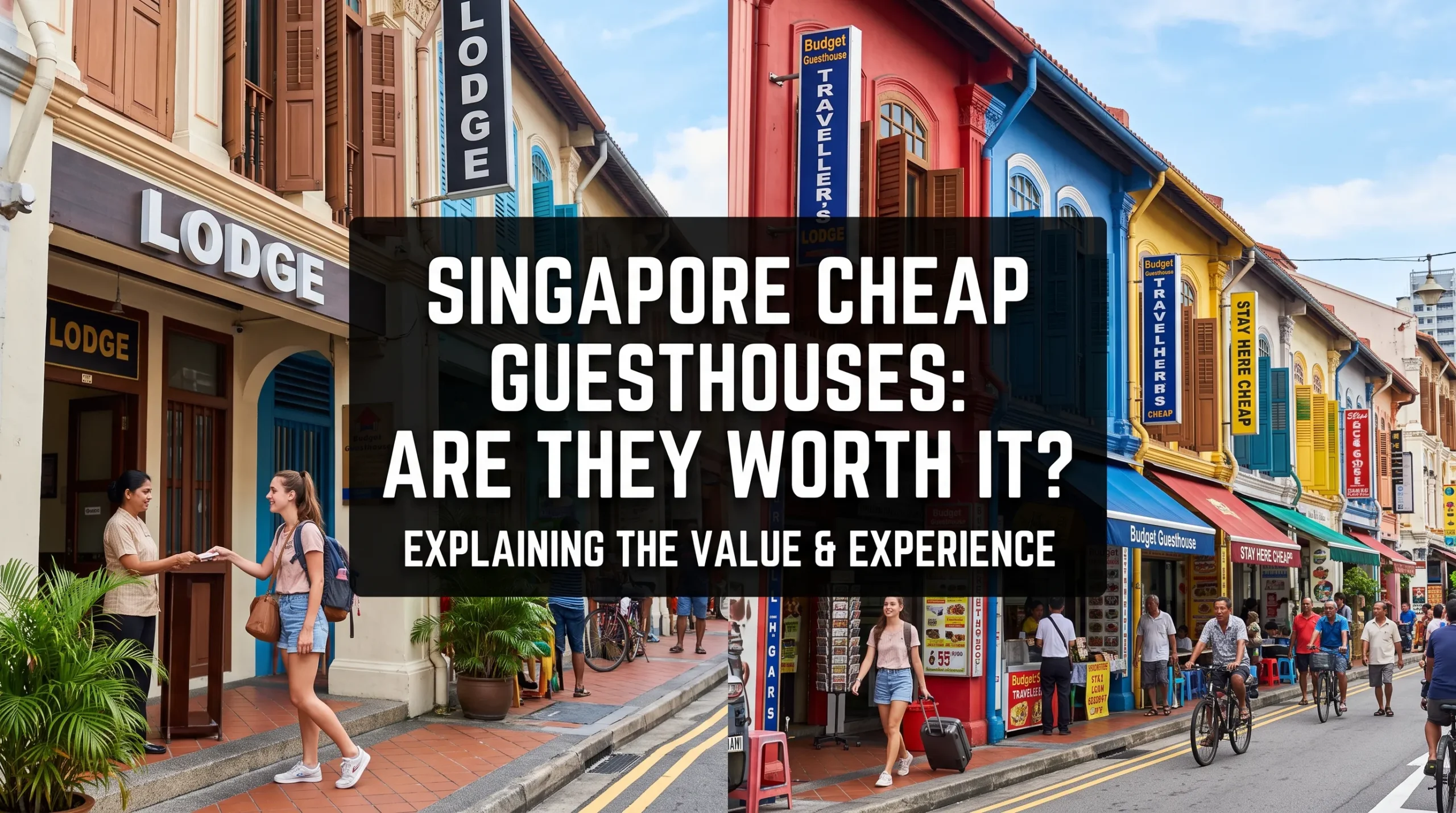
A Singapore guesthouse, in the traditional sense, is a small, often family-run lodging operating out of a converted shophouse, typically clustered in neighborhoods like Little India, Chinatown, or Geylang. Think narrow staircases, a front desk that doubles as someone’s living room, and rooms that were clearly not designed with modern plumbing in mind. This is different from a hostel (bunk beds, common areas, backpacker energy), a capsule hotel (futuristic pods, minimal human contact), or a budget hotel chain (predictable, slightly soulless, but reliably legal).
Here is the catch that separates Singapore from, say, Bangkok or Bali: not every guesthouse operating here is actually allowed to. The Singapore Tourism Board (STB) requires all short-term accommodation providers to hold a valid license, and plenty of “guesthouses” advertised online are unlicensed rooms in HDB flats or shophouses skirting the rules. That is not a minor technicality. It is the difference between a legitimate budget stay and a booking that could evaporate the moment enforcement officers show up.
So the real question isn’t just “is it cheap?” It’s “is it cheap, legal, and actually livable?” Let’s find out.
Key Takeaway
- Cheap guesthouses in Singapore can genuinely save you money, but only the ones licensed by the Singapore Tourism Board. Unlicensed operations are a gamble, not a deal.
- Capsule hotels frequently match or beat guesthouse pricing while offering cleaner facilities and better tech (keyless entry, individual reading lights, actual soundproofing).
- Hostels remain the strongest choice for solo travelers who want a social scene and predictable amenities without hunting through gray-market listings.
- Airbnb-style short-term rentals are heavily restricted under Singapore’s Housing and Development Board (HDB) and Urban Redevelopment Authority (URA) rules, so “looks like a steal” often means “looks illegal.”
- Location and legal status matter more than the number on the booking confirmation. A S$5 discount is not worth losing your room mid-trip.
Comparison Criteria: What Actually Matters When Booking Cheap
Before ranking anything, it helps to agree on what “good value” even means in a city where the definition of budget travel gets stretched thin. These are the six factors used throughout this comparison:
- Price per night, including hidden fees. Deposits, aircon surcharges, and key deposits can quietly inflate a “cheap” rate.
- Legal status and licensing. Verified against STB’s accommodation licensing framework.
- Location and MRT proximity. A cheap bed 45 minutes from the nearest train station is not actually cheap once you factor in Grab fares.
- Cleanliness, safety, and privacy. Shared bathrooms and thin walls are not dealbreakers for everyone, but they should be disclosed, not discovered.
- Amenities. Wifi, aircon reliability, hot water, lockers, and whether breakfast is an actual meal or a single banana.
- Booking flexibility. Cancellation policies and how easily you can actually reach someone if something goes wrong.
Feature-by-Feature Analysis
Price
Nightly rates fluctuate with season and neighborhood, but here is a realistic snapshot based on typical listings across Hostelworld, Agoda, and Booking.com:
| Accommodation Type | Typical Price/Night (SGD) | Notes |
|---|---|---|
| Unlicensed guesthouse room | $25–$45 | Often the cheapest, but legally shaky |
| Licensed guesthouse room | $40–$70 | Legitimate, still budget-friendly |
| Hostel dorm bed | $20–$35 | Shared room, social atmosphere |
| Capsule hotel pod | $35–$60 | Private pod, shared bathroom |
| Budget hotel chain room | $70–$120 | Private bathroom, more predictable |
| Short-term rental (where legal) | $60–$150 | Highly restricted, use caution |
Winner: Hostel dorm beds, for raw price per night. But price alone is a trap, which is why the rest of this list exists.
Legality and Licensing
This is where the guesthouse conversation gets serious. STB requires accommodation providers to hold a license under the Hotels Act or operate under specific exemptions. Many shophouse guesthouses are properly licensed and have operated for years. Others are simply spare rooms in HDB flats rented out in defiance of HDB’s short-term rental rules, which explicitly prohibit renting out flats or rooms for stays shorter than six months without approval.
The Consumers Association of Singapore (CASE) has issued advisories about exactly this problem: travelers booking a “cozy guesthouse” only to find out it is an unlicensed unit that can be shut down without warning, sometimes mid-stay. That is a nightmare scenario that a S$10 nightly saving does not begin to justify.
Winner: Budget hotel chains and capsule hotels, which operate under clear commercial licensing with far less ambiguity.
Location
Guesthouse clusters tend to sit in Little India, Chinatown, and Geylang, areas with real character, cheap eats, and (in Geylang’s case) a reputation that gives some travelers pause. Hostels cluster more heavily around Bugis and Chinatown MRT stations, areas that are arguably more convenient for first-time visitors navigating the transit system.
Capsule hotels have leaned into a strategy of popping up near MRT interchanges and the Central Business District, which makes them appealing for travelers who value being five minutes from a train over being five minutes from a hawker stall with legendary chicken rice.
Winner: Tie between hostels and capsule hotels, depending on whether nightlife or transit access matters more to your itinerary.
Cleanliness and Privacy
Guesthouses
- Pros: More room to spread out than a hostel bunk, sometimes en-suite bathrooms, quieter than a shared dorm.
- Cons: Cleanliness varies wildly by property, no standardized inspection process for unlicensed units, thin shophouse walls.
Hostels
- Pros: Regularly cleaned common areas, lockers for security, staff on-site.
- Cons: Zero privacy, snoring roommates, shared bathrooms that see heavy traffic.
Capsule hotels
- Pros: Individual pods with curtains or doors, generally spotless, designed for solo comfort.
- Cons: Shared bathrooms still apply, pods can feel claustrophobic to anyone larger than average or prone to mild panic in enclosed spaces.
Winner: Capsule hotels, for the best balance of privacy and cleanliness at a similar price point to guesthouses.
Amenities
Wifi speed, aircon reliability, and breakfast inclusion separate the merely cheap from the actually livable. Budget hotel chains and capsule hotels tend to offer the most consistent wifi and properly maintained aircon units, both non-negotiable in Singapore’s relentless humidity. Guesthouses are a mixed bag: some have window units struggling against tropical heat, others have been renovated with modern splits that work fine. Hostels usually have solid wifi (backpackers riot without it) but aircon is sometimes rationed to common areas only.
Winner: Capsule hotels and budget hotel chains, tied for amenity consistency.
Performance Comparison: How They Actually Hold Up in Real Life
Specs on a booking page are one thing. Actually sleeping there is another.
Guesthouses in old shophouses often come with walls that seem to have been built more for decoration than sound insulation. If your neighbor is watching a variety show at full volume or a rooster somehow lives on the roof (this happens more than you’d expect in older Singapore buildings), you will know about it. Capsule hotels, by contrast, are specifically engineered to muffle sound, since the entire business model depends on strangers sleeping three feet apart without wanting to murder each other by 3 a.m.
Check-in experiences diverge sharply too.
Capsule hotels increasingly rely on self-service kiosks and app-based entry, meaning you can check in at 2 a.m. without waking a soul. Guesthouses, especially the smaller family-run ones, often depend on WhatsApp coordination with an owner who may or may not respond promptly, may ask you to wait for a “cousin” to bring the key, and may or may not speak the same language as you.
Charming, until your flight lands at midnight and nobody answers.
Aircon performance deserves its own paragraph because in Singapore’s humidity, a broken aircon unit is not a minor inconvenience, it is a survival issue. Budget hotel chains and capsule hotels generally maintain their units better because they operate at scale with maintenance contracts. Guesthouses vary property by property, and a “cheap” room with a busted aircon in July is not actually cheap once you factor in the sweat-soaked sleep debt. On safety, STB’s general travel guidance and community threads on TripAdvisor’s Singapore forum both point toward the same conclusion: Singapore is remarkably safe overall, but licensed accommodations with proper front-desk staff and security measures offer more accountability if something goes wrong, compared to a guesthouse where the “owner” is a phone number and a WhatsApp profile picture.
Online reviews are useful, but only to a point. A five-star Booking.com rating means little if the reviews are three years old and the property has since changed hands or lost its license. Cross-checking recent reviews on Google Maps alongside the booking platform’s own ratings tends to catch problems (mold complaints, sudden closures, bait-and-switch room photos) faster than relying on one source alone.
Price and Value Analysis: What You’re Really Paying For
The sticker price is only half the story. Hidden fees and legal risk change the real cost of “cheap” lodging considerably.
| Type | Avg. Nightly Cost | Common Hidden Fees | Included Amenities | Risk Level |
|---|---|---|---|---|
| Unlicensed guesthouse | $25–$45 | Cash-only deposits, surprise “cleaning fees” | Basic room, sometimes shared bath | High (possible shutdown, no recourse) |
| Licensed guesthouse | $40–$70 | Minor aircon surcharge sometimes | Room, wifi, sometimes breakfast | Low |
| Hostel | $20–$35 | Locker rental, towel fee | Wifi, common kitchen, lockers | Low |
| Capsule hotel | $35–$60 | Locker deposit | Wifi, individual pod, shared bath | Low |
| Budget hotel chain | $70–$120 | Rarely any | Private bath, daily housekeeping | Very low |
| Short-term rental | $60–$150 | Cleaning fee, service fee | Kitchen, laundry (if legal) | Medium to high, depending on legality |
Reference points from Skyscanner and Booking.com confirm these ranges hold fairly steady outside of peak events like Formula 1 season or the Grand Prix weekend, when everything (including hostel dorms) spikes in price without warning. The unlicensed guesthouse route might look like the cheapest option on paper, but the risk of a last-minute cancellation, a mid-stay shutdown, or simply no legal protection if the “owner” disappears with your deposit makes it a poor bet for anyone who cannot afford to lose a night’s booking and scramble for a replacement room at 11 p.m.
Is saving S$10 to S$15 a night worth surrendering privacy, legal protection, and peace of mind? For most travelers, no. The overall value winner is the licensed guesthouse or capsule hotel, depending on whether privacy (guesthouse) or tech-forward efficiency (capsule) matters more to the traveler in question.
Recommendations for Different Use Cases
- Solo backpackers on a tight budget: Go with a hostel. The social scene, consistent amenities, and rock-bottom dorm pricing outweigh the extra privacy a guesthouse might offer.
- Couples wanting privacy without hotel prices: A licensed guesthouse in Little India or Chinatown is the sweet spot, assuming you’ve verified the license.
- Business travelers needing efficiency: Capsule hotels near MRT lines and the Central Business District minimize commute stress and maximize sleep quality between meetings.
- Families: Skip guesthouses entirely. Budget hotel chains offer more space, safer bathroom setups, and staff who can actually help if a kid gets a fever at midnight.
- Digital nomads: Prioritize wifi speed and desk space over price. Filter listings on Hostelworld or Agoda specifically for “workspace” or “desk” amenities before booking anything advertised as merely “cheap.”
- Party travelers: Hostels near Clarke Quay put nightlife within stumbling distance, which is exactly what a guesthouse in a quiet shophouse district cannot offer.
Final Thoughts
Licensed guesthouses can absolutely be a legitimate way to save money in one of Asia’s most expensive cities, but the licensing part is not optional homework, it is the entire point. A quick check against STB’s public listings before booking takes a few minutes and can save an entire trip from unraveling.
“Cheap” in Singapore is relative, and it is worth resisting the assumption that a guesthouse is automatically the default budget option. Capsule hotels frequently match the price while beating guesthouses on cleanliness and tech, and hostels remain unbeaten for solo travelers who want both savings and company. The cheapest bed in Singapore is only a bargain if you actually get to legally sleep in it all the way until checkout.
FAQ: Quick Answers for Budget Travelers
Are unlicensed guesthouses illegal to stay in as a tourist? Staying in one is not typically a criminal matter for the tourist, but the operator is breaking the law, and that instability means your booking could be canceled without warning if authorities intervene.
How do I check if a Singapore guesthouse is officially licensed? Cross-reference the property name and address against STB’s public accommodation register before booking. If it is not listed, treat that as a red flag, not a technicality.
Is Airbnb legal in Singapore, and what are the restrictions? Short-term rentals under three consecutive months are generally prohibited in private residential properties under URA rules, and HDB flats face even stricter restrictions on subletting for short stays. Most “Airbnb-style” listings that look legitimate for short trips are operating outside these rules.
What’s the cheapest legitimate way to sleep in Singapore for one night? A hostel dorm bed, typically in the $20 to $35 range, remains the cheapest fully legal option with predictable amenities.
Are capsule hotels safe for solo female travelers? Generally yes. Most capsule hotels offer gender-segregated floors or pods, keycard access, and CCTV-monitored common areas, making them a reasonable choice for solo travelers prioritizing both privacy and security.
Where can I find verified reviews before booking? Cross-check recent reviews on Google Maps alongside the booking platform itself, and skim recent threads on TripAdvisor’s Singapore forum for firsthand accounts that go beyond the polished photos on a listing page.