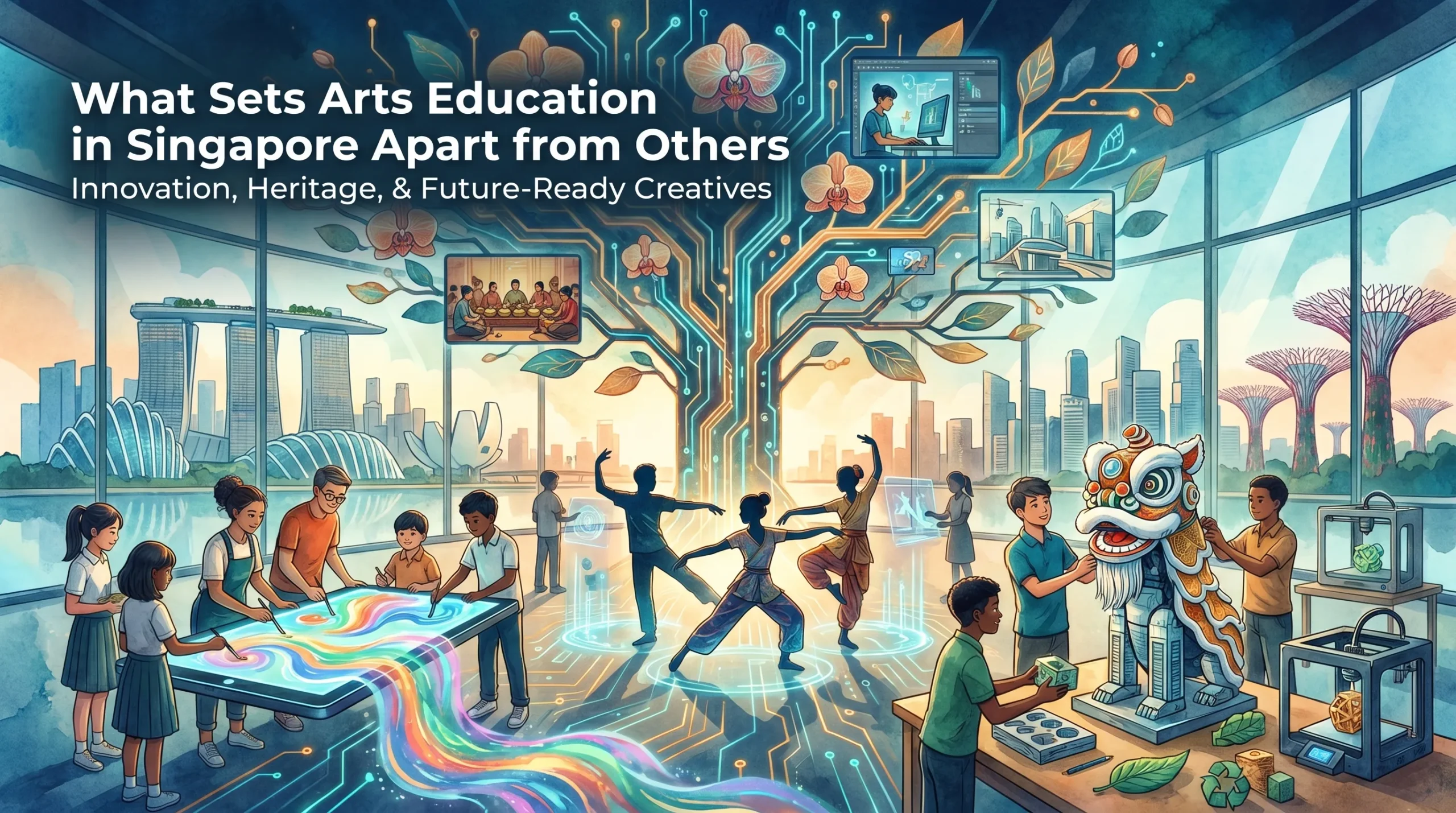
You experience a unique blend of tradition and innovation when you explore arts education in Singapore. Specialized institutions deliver holistic education. The government shapes arts education for ideological purposes, often prioritizing state goals. You see elitist programs and historical funding challenges, but recent efforts aim for inclusivity. The table below highlights these main factors:
|
Factor |
Description |
|---|---|
|
Government Utilization |
Strategic use of arts education for ideological purposes |
|
Bureaucratic Influence |
Bureaucratic imagination guides arts education priorities |
|
Elitist Programs |
Two-track system established by programs like the Arts Elective Programme |
|
Funding Issues |
Historical underfunding and shortage of qualified art teachers |
|
Recent Efforts |
Attempts to diversify arts education despite systemic challenges |
You notice how these elements shape outcomes for students and society.
Next, you discover how institutions and history influence arts education in Singapore.
Key Takeaways
-
Arts education in Singapore blends tradition with innovation, offering a unique curriculum that prepares students for diverse creative careers.
-
Government support plays a crucial role, providing funding and resources that enhance arts programs and promote inclusivity for all students.
-
Key institutions like NAFA and LASALLE foster cultural identity and creativity, helping students connect with both local and global art scenes.
-
Community outreach programs ensure that arts education is accessible, allowing students from various backgrounds to engage and develop their skills.
-
Engagement in arts education boosts academic performance, enhances critical thinking, and supports mental well-being, preparing students for future challenges.
Arts Education in Singapore: Institutions and History
Pioneer Institutions and Their Roles
You find that several key institutions have shaped arts education in Singapore. These schools have played important roles in building the country’s cultural identity and creative landscape.
-
The Nanyang Academy of Fine Arts (NAFA) stands out as a pioneer. NAFA helped develop Nanyang Art, a style that blends Chinese, Malay, and Western influences. This art form reflects the diverse society of Singapore and supports nation-building.
-
LASALLE College of the Arts offers programs that encourage you to explore both traditional and modern art forms. The school’s mission has changed over time to focus on creativity and innovation.
-
The School of the Arts (SOTA) provides a unique curriculum for young artists. You can study both academic subjects and the arts, which prepares you for further studies or careers in creative fields.
These institutions do more than teach art. They help you understand Singapore’s history and culture. They also promote national identity and pride through their programs.
Evolution of Arts Education
You see that arts education in Singapore has changed a lot over the years. The government has used arts education to shape society and support national goals. In 1984, the Arts Elective Programme created a two-track system. This move made arts education more selective, but it also raised the profile of the arts.
Over the past two decades, the government has invested more in visual and performing arts. You notice that schools now offer more arts programs to encourage creativity and originality. The creation of the university of the arts singapore marks a major milestone. This new university brings together LASALLE and NAFA, showing the growing demand for arts higher education in Singapore and Asia.
Today, arts education in singapore helps you develop creative skills and a deeper understanding of culture. These changes have made Singapore a leader in arts higher education in the region.
Innovative Curriculum and Pedagogy
Traditional and Contemporary Arts Integration
You experience a unique approach in arts education in Singapore. The curriculum blends traditional art forms with contemporary practices. In your art classes, you learn about heritage crafts and modern digital techniques. This mix helps you understand the roots of culture while preparing you for the future. You see how academic training connects with practical skills.
Your art activities often include both painting and digital media, giving you a broad perspective.
-
You participate in art classes that focus on both technical ability and professional skills.
-
You join art activities that encourage self-expression through traditional and modern methods.
-
You notice that learning always links to real-world applications, especially in the creative industries.
-
You find that art activities often reflect Singapore’s multicultural environment.
This integration prepares you for many career paths in the creative industries. You gain skills that help you adapt to changes in the art world.
Creativity and Critical Thinking Focus
You discover that creativity stands at the center of every lesson. Your teachers design art classes to spark creative thinking and self-expression. You take part in art activities that challenge you to solve problems and think differently. Inquiry-based learning forms a big part of your experience. You ask questions, explore new ideas, and reflect on your work.
-
You practice creative thinking in every art class.
-
You use learning strategies that build both creativity and critical thinking.
-
You join art activities that connect with the creative industries, making your learning relevant and exciting.
-
You see how self-expression grows through each project.
This focus on creativity and learning helps you develop skills for the creative industries. You become confident in your ability to express ideas and solve problems.
Arts education in Singapore gives you the tools to succeed in a changing world.
Government Support and Global Partnerships
Strategic Funding and National Initiatives
You see strong government support as a key feature of arts education in Singapore. The government invests heavily in both visual and performing arts programs. Over the past twenty years, you notice a steady increase in funding for schools and institutions that focus on the arts. Special Assistance Plan schools include arts programs in their curriculum, which helps you access a wide range of creative opportunities.
Policies encourage you to develop originality and creative thinking. These efforts show you how the government values the arts as part of national development.
-
The government provides grants and scholarships for students who want to pursue arts education.
-
National initiatives promote arts appreciation and participation across all age groups.
-
You benefit from resources that support both traditional and modern art forms.
Collaborations with International Arts Institutions
You find that global partnerships play a big role in shaping your learning experience. Singapore’s arts institutions work with leading organizations from around the world. These collaborations bring you exposure to international artists, new teaching methods, and global trends. You may join exchange programs or attend workshops led by visiting experts. Such experiences help you understand different cultures and artistic styles.
-
Institutions like LASALLE and NAFA partner with universities and arts centers in Europe, the United States, and Asia.
-
You participate in joint exhibitions, performances, and research projects.
-
These partnerships open doors for you to study or work abroad.
You gain a broader perspective and build networks that support your growth as an artist. Global partnerships ensure that arts education in Singapore stays current and competitive.
Access, Inclusivity, and Community
Arts Education for All Backgrounds
You see that Singapore makes arts education accessible to students from many backgrounds. The Ministry of Education designs art programmes that support both academic and creative growth. You benefit from a system that values creative thinking and communication as core skills. Art develops focus, persistence, and creativity, which help you perform better in school.
You find that regular creative practice helps you manage stress, especially during exam periods.
You notice that arts programmes complement academics rather than compete with study time. If you show artistic talent, you can use the Direct School Admission pathway to enter secondary schools. This opens new opportunities for you to pursue your passion. You prepare for university and future careers by building skills in creative problem-solving and visual communication.
|
Benefit |
Description |
|---|---|
|
Complements academics |
Art develops skills that enhance academic performance |
|
Stress management |
Creative practice helps you handle exam stress |
|
21st Century Competencies |
Art builds creative thinking and communication |
|
University and career prep |
Creative skills valued across professions |
|
DSA pathway |
Talented students access secondary schools through art |
Community Outreach Programs
You participate in community outreach programs that broaden your experience. Schools and arts institutions organize workshops, exhibitions, and performances for everyone. You join enrichment activities that connect you with peers from different backgrounds. These programs give you opportunities to learn from artists and explore new art forms.
-
You attend workshops that teach both traditional and modern techniques.
-
You take part in public exhibitions that showcase student work.
-
You join performances that celebrate Singapore’s multicultural heritage.
Community outreach programs make arts education inclusive. You gain exposure to diverse perspectives and cultures. You build confidence and develop new skills through hands-on activities. These programs ensure that you have equal opportunities to participate in art programmes, regardless of your background.
Benefits and Outcomes of Arts Education
Art Education Benefits for Students
You gain many benefits from arts education in Singapore. You develop skills that help you succeed in both academic and creative fields. You build confidence through regular engagement with art projects. You learn to express ideas clearly and solve problems in new ways. You improve your academic performance by practicing focus and persistence.
You discover that art education benefits extend beyond the classroom.
-
You strengthen communication skills by presenting your work.
-
You sharpen critical thinking skills through analysis of art.
-
You enhance academic skills by connecting art concepts to other subjects.
-
You boost well-being by using art as a way to manage stress.
-
You build teamwork skills during group projects and performances.
-
You develop leadership skills by organizing exhibitions and events.
-
You improve observation skills by studying details in art.
-
You grow creative skills by experimenting with materials and techniques.
-
You gain digital skills through modern art practices.
-
You expand problem-solving skills by tackling artistic challenges.
-
You refine academic skills with research and reflection.
-
You foster engagement by participating in art competitions and showcases.
You see students from Singapore achieve international recognition. You witness their engagement in global exhibitions and festivals. You notice that many students win awards for their creative skills. You observe how art education benefits prepare you for university and future careers. You realize that engagement in the arts builds a strong foundation for lifelong learning.
Note: Art education benefits include improved academic skills, creative skills, and well-being. You experience these benefits through daily engagement with art.
|
Benefit |
Description |
|---|---|
|
Academic skills |
Art supports learning in other subjects |
|
Creative skills |
You develop new ways to solve problems |
|
Communication skills |
You learn to share ideas effectively |
|
Well-being |
Art helps you manage stress and emotions |
|
Leadership skills |
You take charge of projects and events |
|
Digital skills |
You use technology in modern art practices |
|
Teamwork skills |
You collaborate with others |
|
Engagement |
You participate in competitions and exhibitions |
You see how arts education in Singapore stands out for its strong institutions, innovative curriculum, and government support. You benefit from a system that values inclusivity and community engagement. This approach helps you build creative and critical thinking skills for the future. The book ‘Artistic Thinking in the Schools’ highlights how these strategies prepare you for a complex world.
Other countries can learn from this model to strengthen their own arts education systems.
FAQ
What makes arts education in Singapore unique?
You experience a blend of tradition and innovation. Institutions combine heritage arts with modern practices. Government support and global partnerships give you access to world-class resources. You see a focus on creativity, critical thinking, and inclusivity.
What career paths can you pursue after arts education in Singapore?
You can become an artist, designer, educator, or arts manager. Many graduates work in creative industries like advertising, media, and entertainment. Some choose roles in museums, galleries, or cultural organizations.
What drives the demand for arts education in Singapore?
You see growing interest in creative skills for the future economy. Industries value innovation and problem-solving. Parents and students recognize the importance of arts for personal growth and career opportunities.
What support do students receive during their arts education journey?
You receive scholarships, grants, and mentorship from experienced artists. Schools offer workshops, exhibitions, and exchange programs. Community outreach helps you connect with peers and professionals.
What opportunities exist for international exposure?
You join exchange programs, attend workshops with global artists, and participate in overseas exhibitions. Partnerships with international institutions let you learn new techniques and gain fresh perspectives.