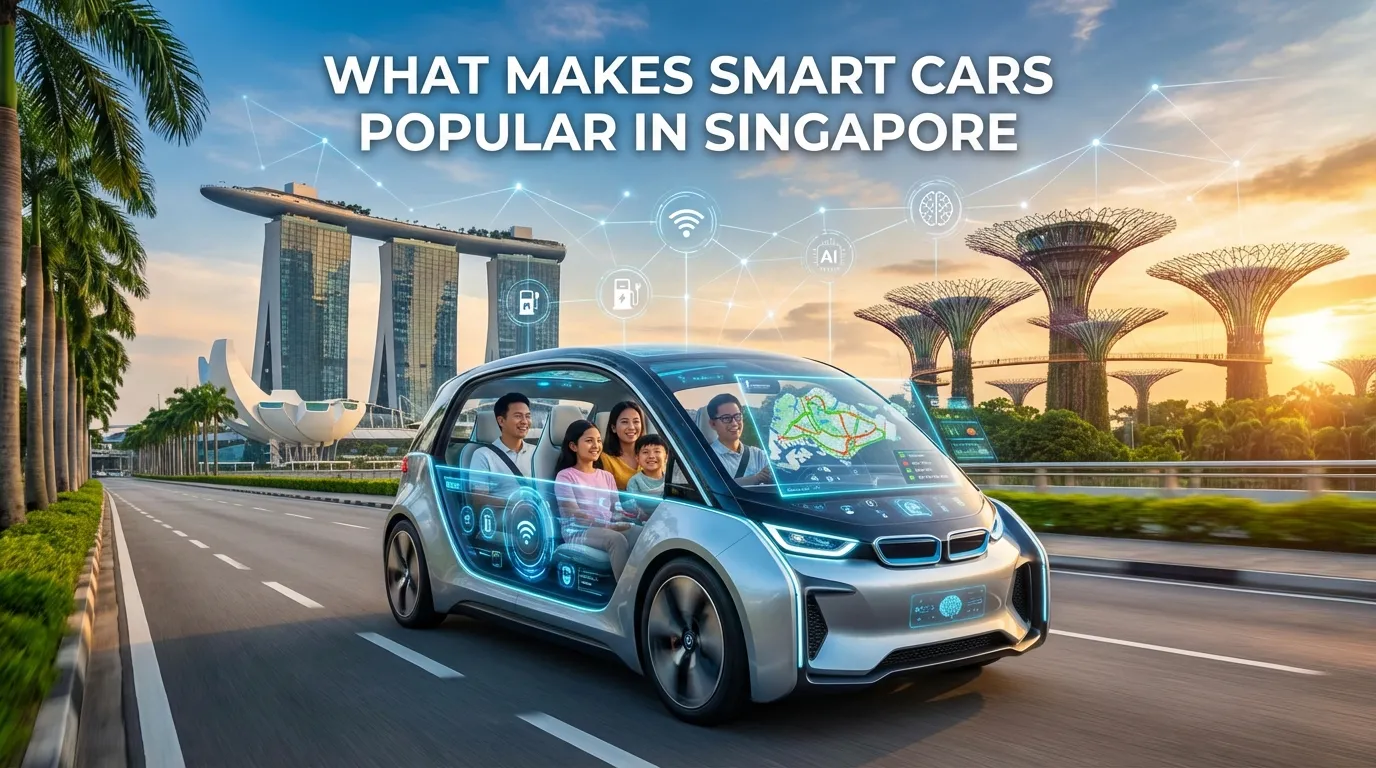
Singapore has witnessed a surge in the adoption of smart cars, driven by their eco-friendly nature and advanced technology. The number of electric vehicles has grown significantly, reaching 11,941 compared to just 2,942 in 2021. This shift aligns with Singapore’s Smart Nation vision, which emphasizes sustainable urban mobility. Initiatives like the S$22 million Smart Mobility Test Bed program and a dedicated 3.7-mile autonomous vehicle route highlight the nation’s commitment to integrating smart car technology.
By cutting emissions and boosting connectivity, these innovations establish the smart car in Singapore as a central component in the evolution of transportation within the country.
Benefits of Smart Cars in Singapore
Environmental Advantages
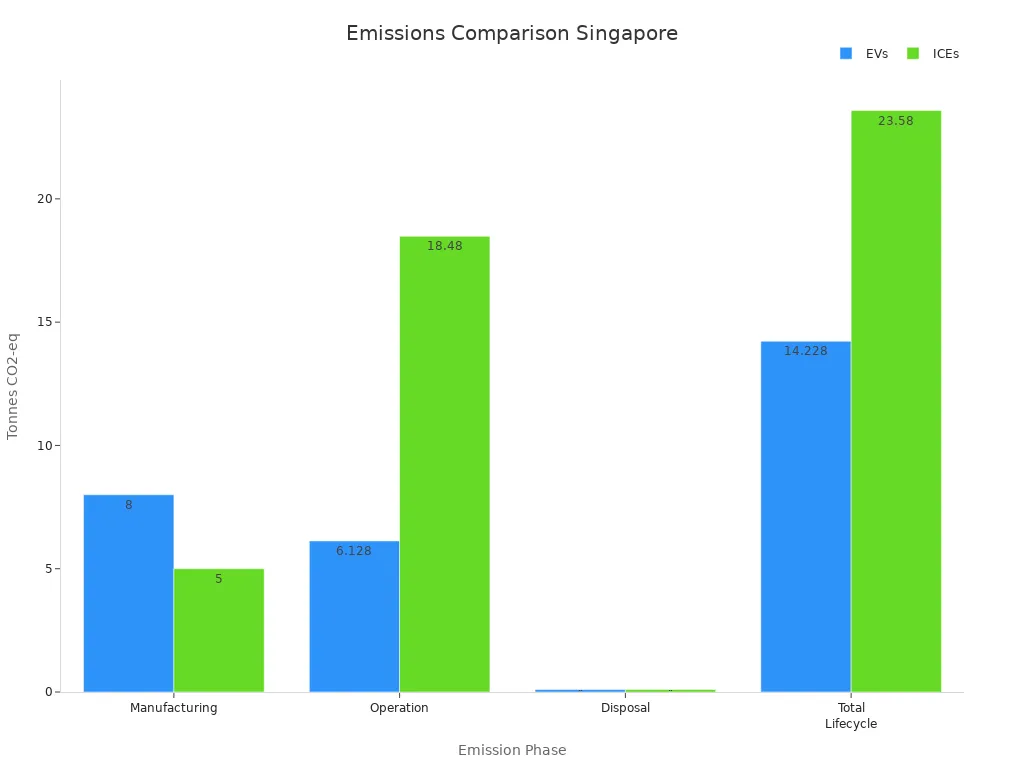
Smart cars play a pivotal role in reducing Singapore’s carbon footprint. Electric vehicles (EVs), a key component of smart car technology, produce significantly lower emissions compared to internal combustion engine (ICE) vehicles. A lifecycle analysis reveals that EVs generate 14.228 tonnes of CO2-equivalent emissions, while ICE vehicles emit 23.58 tonnes.
This substantial difference highlights the environmental benefits of transitioning to EVs.
Studies also suggest that switching completely to electric vehicles might reduce air temperatures close to the ground in cities by as much as 0.9°C. Singapore’s heat island effect is worsened by traffic, which is a key factor in urban warming. The Cooling Singapore project and similar endeavors work to solve these problems, stressing the significance of using smart cars.
Urban Traffic Solutions
Smart cars contribute to smoother traffic flow and reduced congestion in Singapore’s urban landscape. Autonomous driving technology and real-time connectivity enable these vehicles to optimize routes, minimizing delays. Statistics show that smart mobility solutions have reduced peak-hour delays by 20% and improved average speeds from 18 km/h to 21 km/h.
|
Benefit |
Statistic |
|---|---|
|
Annual economic savings |
$1 billion due to reduced congestion |
|
Savings from avoided infrastructure |
$500 million from not needing road upgrades |
|
Peak-hour delay reduction |
20% reduction in delays |
|
Average speed improvement |
15% increase from 18 km/h to 21 km/h |
These advancements not only enhance commuter experiences but also reduce the need for costly infrastructure upgrades, saving the nation approximately $500 million annually.
Cost Efficiency for Drivers
Smart cars offer long-term cost savings for drivers in Singapore. While EVs have higher upfront costs, their lower fuel and maintenance expenses make them more economical over time. Shared and autonomous EV fleets, which experience higher usage rates, further reduce operational costs.
Singapore’s road pricing system also encourages drivers to switch to public transport or shared mobility options, optimizing resource allocation. This approach aligns with the concept of road pricing introduced by Pigou, which suggests that private motorists should bear additional costs to mitigate congestion impacts.
As a result, drivers benefit from reduced expenses while contributing to a more efficient transportation system.
Technological Features of Smart Cars
Autonomous Driving Technology
Autonomous driving technology represents a groundbreaking innovation in the automotive industry. Smart cars equipped with artificial intelligence (AI) can navigate roads, detect obstacles, and make decisions without human intervention. AI has significantly improved vehicle performance and safety by enabling features like predictive maintenance and adaptive cruise control.
In Singapore, autonomous vehicle testing has made remarkable progress. In 2016, NuTonomy introduced the world’s first “robot taxis,” and by 2023, collaborations with companies like AutoX and Waymo expanded testing zones and introduced diverse fleets of autonomous vehicles. These advancements demonstrate Singapore’s commitment to integrating autonomous driving into its transportation system. Simulation testing plays a crucial role in validating autonomous driving technology.
Real-world testing would require vehicles to travel an impractical distance of 14 billion kilometers to ensure reliability. Simulations allow researchers to evaluate performance under various conditions, ensuring safety and efficiency before deployment.
Autonomous vehicles also integrate seamlessly with public transportation systems, optimizing routes based on local demand.
Connectivity and Smart Integration
Connectivity and smart integration enhance the functionality of modern vehicles. Smart cars use vehicle-to-vehicle (V2V) and vehicle-to-infrastructure (V2I) communication to share real-time data. This technology reduces traffic congestion and improves road safety. For example, traffic signals that communicate with vehicles have reduced congestion by 12% in pilot areas.
V2V and V2I technologies can prevent or mitigate up to 80% of non-impaired crashes, according to the National Highway Traffic Safety Administration (NHTSA).
|
Benefit |
Statistic |
|---|---|
|
Traffic Congestion Reduction |
Reduced by approximately 12% in pilot areas due to traffic signals communicating with vehicles. |
|
Road Safety Improvement |
V2V and V2I technologies could prevent or mitigate up to 80% of non-impaired crashes. |
|
Collision Reduction |
Volvo’s City Safety system has reduced rear-end collisions by 41%. |
These features make smart cars an integral part of Singapore’s vision for a connected and efficient transportation network.
Enhanced Safety Features
Safety remains a top priority for smart cars. Advanced driver-assistance systems (ADAS) use sensors, cameras, and radar to monitor surroundings and prevent accidents. Features like automatic emergency braking, lane-keeping assistance, and blind-spot detection significantly reduce the risk of collisions.
AI-driven systems also analyze driver behavior, issuing alerts to prevent drowsy or distracted driving.
Singapore’s focus on safety extends to autonomous vehicles. AI-powered systems in these vehicles ensure precise navigation and obstacle detection, minimizing human error. The integration of safety features with connectivity technologies further enhances protection for drivers and pedestrians. These advancements position the smart car in singapore as a leader in safe and innovative transportation solutions.
Smart Cars and Singapore’s Vision
Contribution to Smart Nation Goals
Smart cars align seamlessly with Singapore’s Smart Nation vision, which emphasizes the use of technology to improve urban living. These vehicles contribute to this goal by integrating advanced technologies such as artificial intelligence, big data, and the Internet of Things (IoT). For instance, autonomous vehicles equipped with AI optimize traffic flow and reduce congestion. This innovation supports Singapore’s ambition to create a more efficient and sustainable transportation system.
The adoption of smart cars also complements the nation’s efforts to reduce carbon emissions. Singapore can greatly reduce its environmental footprint by switching to electric vehicles. Research indicates that replacing conventional cars with EVs can lessen air pollution in cities and lessen the urban heat island effect. These benefits underscore how EVs can help create a more sustainable and intelligent urban environment.
Government Support and Incentives
The Singaporean government plays a pivotal role in promoting the adoption of smart cars. Policies and incentives encourage individuals and businesses to transition to EVs. For example, the government has introduced rebates under the Vehicular Emissions Scheme (VES) to make EVs more affordable.
The Early Adoption Incentive (EEAI) provides financial support to those purchasing electric vehicles.
To further accelerate the shift, Singapore has announced plans to stop registering diesel cars and taxis by 2025. This policy aligns with the nation’s commitment to sustainability. The government also collaborates with stakeholders, such as carpark owners and regulatory bodies, to address challenges related to EV adoption. These efforts ensure a smooth transition to a smart and sustainable transportation ecosystem.
Infrastructure for Smart Cars
Infrastructure development is crucial for the widespread adoption of smart cars in Singapore. The government has made significant investments in building an extensive charging network to alleviate range anxiety among EV users. By 2025, all public residential towns will be equipped to support electric vehicles.
This initiative includes the replacement of over 400 diesel buses with electric buses, further reducing emissions.
Singapore’s infrastructure also supports vehicle-to-everything (V2X) communication, which enhances traffic routing and safety. Autonomous vehicles benefit from this technology, as it enables seamless interaction with road infrastructure.
The National Electric Vehicle Center (NEVC) plays a key role in coordinating these efforts, ensuring that Singapore remains at the forefront of smart mobility innovation.
|
Evidence Description |
Details |
|---|---|
|
V2X Infrastructure |
Communication between vehicles and road infrastructure for better safety. |
|
Autonomous Vehicles |
Deployment of self-driving vehicles for various transport needs. |
|
Real-time Information |
Use of big data and IoT for intelligent transport systems. |
Singapore’s commitment to developing a solid infrastructure to support the integration of smart cars in its urban environment is shown by these advancements.
Smart cars are revolutionizing Singapore’s transportation landscape by offering sustainable and efficient solutions. Their advanced technologies, such as autonomous driving and connectivity, align with the nation’s Smart Nation vision. These vehicles ease traffic congestion and improve urban mobility through intelligent transport systems. Singapore’s innovative Electronic Road Pricing (ERP), soon based on distance traveled, further enhances efficiency. The Land Transport Authority (LTA) uses data analytics to optimize public bus services, reducing overcrowding and improving punctuality.
As infrastructure and policies evolve, smart cars will continue shaping a greener and smarter urban future.
FAQ
What are smart cars, and how do they differ from traditional vehicles?
Smart cars integrate advanced technologies like artificial intelligence, connectivity, and autonomous driving. Unlike traditional vehicles, they optimize routes, reduce emissions, and enhance safety through features such as real-time data sharing and driver-assistance systems. These innovations make them more efficient and eco-friendly.
Are smart cars suitable for Singapore’s urban environment?
Yes, smart cars are ideal for Singapore’s dense urban landscape. Their compact designs, autonomous driving capabilities, and real-time traffic optimization help reduce congestion. Their electric powertrains align with Singapore’s sustainability goals, making them a practical choice for city driving.
How does the government support smart car adoption in Singapore?
The Singaporean government offers incentives like the Vehicular Emissions Scheme (VES) rebates and the Early Adoption Incentive (EEAI). Policies such as phasing out diesel vehicles and expanding EV charging infrastructure further encourage the transition to smart cars.
What safety features do smart cars offer?
Smart cars include advanced safety features like automatic emergency braking, lane-keeping assistance, and blind-spot detection. AI-driven systems monitor driver behavior and surroundings, reducing accident risks. These technologies ensure safer journeys for drivers and pedestrians alike.
Will smart cars become more affordable in the future?
Smart cars are expected to become more affordable as technology advances and production scales increase. Government incentives and reduced operational costs, such as lower fuel and maintenance expenses, also contribute to making smart cars a cost-effective option over time.