In Singapore, lifelong learning in Singapore plays a critical role in helping you stay agile in an ever-changing economy. Modular and flexible learning pathways make it easier for you to build skills, especially if you are a low-skilled worker. Studies show that improving numeracy by just one standard deviation can boost wages by 9% and enhance employability.
However, challenges persist.
Nearly one-fifth of adults struggle with literacy and numeracy, signaling a need for better access to lifelong learning opportunities. Engaging in continuous learning in Singapore can aid in securing employment in a competitive job market and contribute to increased job fulfillment.
Singapore’s Lifelong Learning Initiatives
SkillsFuture and its impact on workforce resilience
The SkillsFuture movement stands as a cornerstone of lifelong learning in Singapore. It empowers you to take charge of your professional development by offering accessible and flexible learning pathways. Through the SkillsFuture Credit program, you receive credits to enroll in skill-based courses that align with your career goals. This initiative ensures that lifelong learning remains within reach for individuals across different socioeconomic groups.
Singapore’s focus on lifelong learning has yielded measurable outcomes.
For instance, 60% of the workforce actively participates in upskilling programs, a stark contrast to Hong Kong’s 30%. This high participation rate reflects the effectiveness of SkillsFuture in fostering workforce adaptability. While the system aims to enhance workforce skills, it has not fully addressed income inequality or improved social mobility for lower-skilled workers.
Despite these hurdles, SkillsFuture continues to play a pivotal role in equipping you with the skills needed to thrive in a competitive global economy.
Government policies promoting lifelong learning in Singapore
Singapore’s government has implemented robust policies to promote lifelong learning. These policies focus on creating a culture where continuous education becomes a norm. For example, the government invests heavily in adult education and training programs to ensure that you can adapt to evolving industry demands.
In 2000, 33% of residents aged 15-64 participated in job-related structured training. This figure has grown significantly over the years, showcasing the government’s commitment to workforce development.
One key aspect of these policies is the integration of lifelong learning with labor market regulations. This approach ensures that training programs align with industry needs, enhancing your employability. Additionally, the government supports the online education ecosystem, making learning opportunities more accessible. These efforts collectively contribute to building a resilient workforce capable of navigating economic and technological changes.
Examples of accessible lifelong learning programs
Singapore offers a wide range of lifelong learning programs designed to meet diverse needs. The SkillsFuture Credit program is a prime example which provide you with financial support to pursue courses in areas such as digital skills, leadership, and technical expertise.
Another notable initiative is the Professional Conversion Program (PCP), which helps you transition into new industries through targeted reskilling efforts.
Educational institutions also play a significant role in promoting lifelong learning. Universities and polytechnics offer continuing education courses tailored to industry requirements. These programs enable you to stay relevant in your field or explore new career paths. The Lifelong Learning Institute (LLI) serves as a hub for adult education, offering a variety of training programs that cater to different skill levels.
The accessibility of these programs ensures that lifelong learning in Singapore remains inclusive. Whether you are a fresh graduate, a mid-career professional, or a retiree, you can find opportunities to enhance your skills and stay competitive in the workforce.
Collaboration in Lifelong Learning
Partnerships between government, industries, and educational institutions
Collaboration between government agencies, industries, and educational institutions forms the backbone of lifelong learning in Singapore. These partnerships ensure that training programs align with real-world demands, making them more effective for you as a learner. The government plays a pivotal role by funding initiatives like SkillsFuture and fostering a culture of continuous education.
Industries contribute by identifying skill gaps and providing insights into emerging trends. Educational institutions, on the other hand, design and deliver courses tailored to these needs.
For example, the Professional Conversion Program (PCP) is a result of such collaboration. It helps working adults like you transition into new industries through targeted reskilling efforts. This program highlights how partnerships can address workforce challenges while supporting mid-career reskilling. By working together, these stakeholders create a robust ecosystem that supports your growth and adaptability in a dynamic economy.
Successful collaborations driving workforce development
Singapore has seen several successful collaborations that have significantly impacted workforce development. One notable example is the partnership between the Lifelong Learning Institute (LLI) and various industry leaders. Together, they offer specialized training programs that equip you with industry-relevant skills. These programs cater to diverse sectors, including healthcare, technology, and manufacturing.
Another success story is the collaboration between the Institute for Adult Learning (IAL) and local businesses. This partnership focuses on enhancing adult education by integrating workplace learning with formal training.
As a result, you can gain practical experience while upgrading your skills, making you more competitive in the job market.
Statistics further illustrate the impact of these collaborations. In 2021, 24,000 enterprises and 660,000 individuals participated in SkillsFuture-supported reskilling programs. This marked a 22% increase in enterprise participation and a 71% rise in individual participation compared to 2020. These numbers demonstrate how collaborative efforts drive workforce development and ensure that lifelong learning remains accessible to all.
Aligning lifelong learning with industry needs
Aligning lifelong learning initiatives with industry needs is crucial for maintaining workforce relevance. Singapore achieves this alignment through data-driven approaches and active engagement with industry stakeholders. For instance, the government regularly conducts labor market analyses to identify emerging trends and skill gaps. This information helps shape training programs that meet the specific needs of various sectors.
The following table highlights the training participation rates across different job categories, showcasing how lifelong learning initiatives cater to diverse workforce segments:
|
Job Category |
Training Participation Rate (%) |
|---|---|
|
Professionals, Managers, Executives, Technicians (PMETs) |
58.7 |
|
Clerical, Sales and Services Workers |
38.3 |
|
Production and Related Workers |
21.5 |
These figures reveal that professionals and managers benefit the most from lifelong learning programs, while participation among production workers remains lower. This disparity underscores the need for targeted support for mid-career and lower-skilled workers to ensure inclusivity.
The SkillsFuture initiative has made significant strides in aligning training with industry needs. By the end of 2021, 27% of eligible Singaporeans had utilized their SkillsFuture Credit. This demonstrates the program’s effectiveness in encouraging you to pursue courses that enhance your employability.
For individuals at any stage of their career, from entry-level to seasoned experts, these efforts guarantee that ongoing learning in Singapore maintains its relevance and positive influence.

Institutions Supporting Lifelong Learning in Singapore
The Lifelong Learning Institute (LLI) and its role in upskilling
The Lifelong Learning Institute (LLI) plays a pivotal role in equipping you with the skills needed to thrive in Singapore’s dynamic economy. As a hub for adult education, LLI offers a wide range of training programs tailored to meet industry demands. These programs focus on reskilling and upskilling, ensuring that you remain competitive in the workforce.
LLI’s impact is evident in its measurable outcomes. For instance:
-
98% of trainees reported improved work performance after completing training through SkillsFuture-supported initiatives.
-
Many professionals have highlighted the need for supportive learning environments, as exhaustion often hinders their ability to upskill.
-
6 in 10 Singapore firms have expressed concerns about skills gaps affecting their transformation efforts.
These statistics underscore the importance of LLI in addressing workforce challenges and fostering a culture of lifelong learning in Singapore.
Contributions of the Institute for Adult Learning (IAL)
The Institute for Adult Learning (IAL) focuses on enhancing the quality of adult education in Singapore. It collaborates with businesses and training providers to create innovative learning solutions that align with industry needs. IAL emphasizes workplace learning, enabling you to gain practical experience while upgrading your skills.
IAL’s initiatives include research on adult learning methodologies and the development of professional standards for trainers. These efforts ensure that training programs remain relevant and effective. By integrating formal training with on-the-job learning, IAL helps you apply new knowledge directly to your work environment. This approach not only boosts your productivity but also enhances your career prospects.
Lifelong Learning Addressing Workforce Challenges
Challenges faced by workers in a rapidly evolving economy
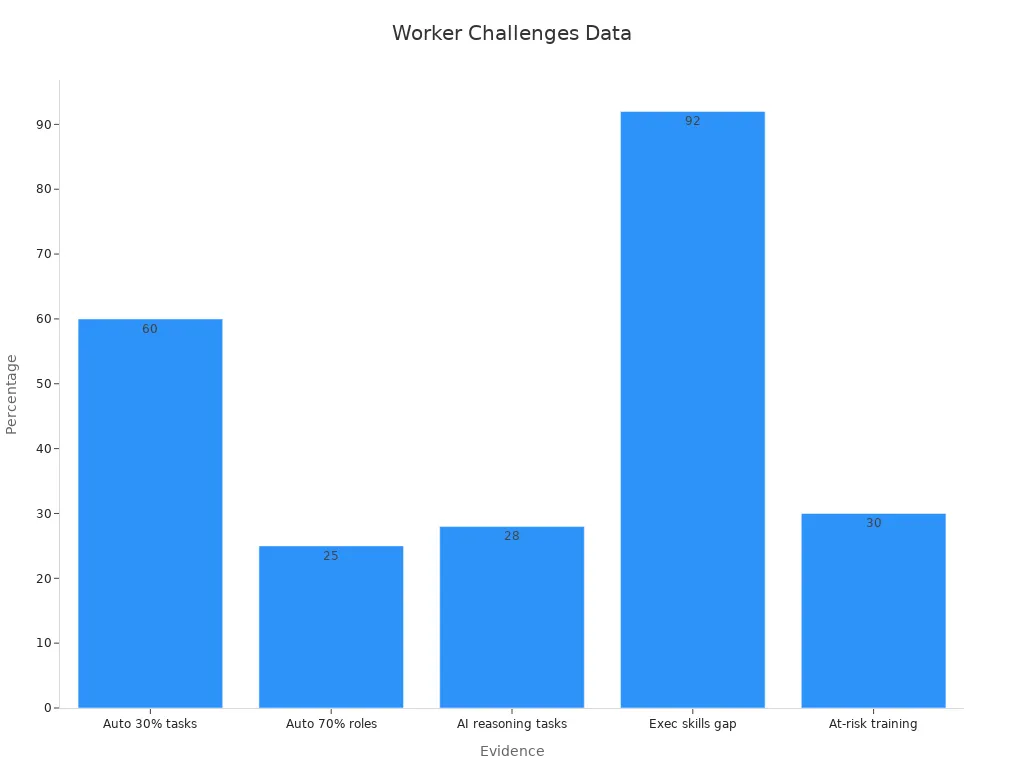
Rapid economic and technological changes have transformed the global job market, and Singapore is no exception. Automation and artificial intelligence (AI) are reshaping industries, leaving many workers struggling to keep up. You may find that tasks once performed manually are now automated, requiring you to adapt quickly to new roles and responsibilities.
The following table highlights the impact of automation on job roles:
|
Evidence Description |
Statistic/Value |
|---|---|
|
Percentage of job roles with at least 30% of tasks that can be automated |
|
|
Percentage of job roles with more than 70% of automatable tasks |
25% |
|
Expected percentage of reasoning and decision-making tasks performed by machines |
28% in 2022 |
|
Average spending on training and development per employee in 2015 |
$1,252 |
These statistics emphasize the urgency of lifelong learning. Without continuous skill development, you risk falling behind in a competitive workforce. Singapore’s focus on adult education and reskilling programs ensures that you can stay relevant, even as industries evolve.
Supporting at-risk groups through lifelong learning
Certain groups face higher risks of job insecurity, particularly in industries like construction and media. Over 40% of male workers in Singapore report feeling insecure about their jobs, with rates climbing to 50% in some sectors. If you belong to an at-risk group, engaging in lifelong learning can significantly improve your job security.
Programs like SkillsFuture and the Professional Conversion Program (PCP) provide targeted support for workers in vulnerable positions. These initiatives help you acquire new skills and transition into stable industries.
For example, SkillsFuture focuses on equipping you with digital and technical expertise, ensuring you remain employable in a tech-driven economy.
Yvonne Teo, a workforce development expert, highlights the importance of upskilling and reskilling. By participating in these programs, you can enhance your career prospects and reduce the risk of redundancy.
Facilitating career transitions and enhancing job security
Career transitions can be daunting, especially if you are mid-career or entering a new industry. Lifelong learning initiatives in Singapore aim to make these transitions smoother. Programs like the PCP offer structured pathways to help you reskill and adapt to new roles. These efforts not only improve your employability but also boost your confidence in navigating career changes.
The table below showcases the impact of key lifelong learning initiatives:
|
Initiative |
Year Launched |
Focus Area |
Impact on Workforce Adaptability and Productivity |
|---|---|---|---|
|
SkillsFuture |
2015 |
Continuous skill development |
Enhanced adaptability to job market changes |
|
Thinking School Learning Nation |
1997 |
Lifelong learning blueprint |
Established a foundation for ongoing education |
|
Government-Industry Collaboration |
N/A |
Reskilling and internships |
Increased opportunities for workforce upskilling |
These programs demonstrate Singapore’s commitment to fostering a resilient workforce. By participating in these initiatives, you can secure your place in a rapidly changing job market and enjoy greater job stability.
Lifelong learning in singapore empowers you to navigate global disruptions and technological advancements with confidence. It fosters a cohesive society and enhances the nation’s competitiveness. Opportunities for lifelong learning remain accessible to everyone, ensuring inclusivity regardless of background. Collaboration among governments, industries, and educational institutions plays a vital role in aligning training programs with real-world needs. This partnership ensures that you gain relevant skills to thrive in a dynamic economy.
Continuous investment in human capabilities strengthens workforce adaptability, securing singapore’s position as a global leader in innovation and resilience.