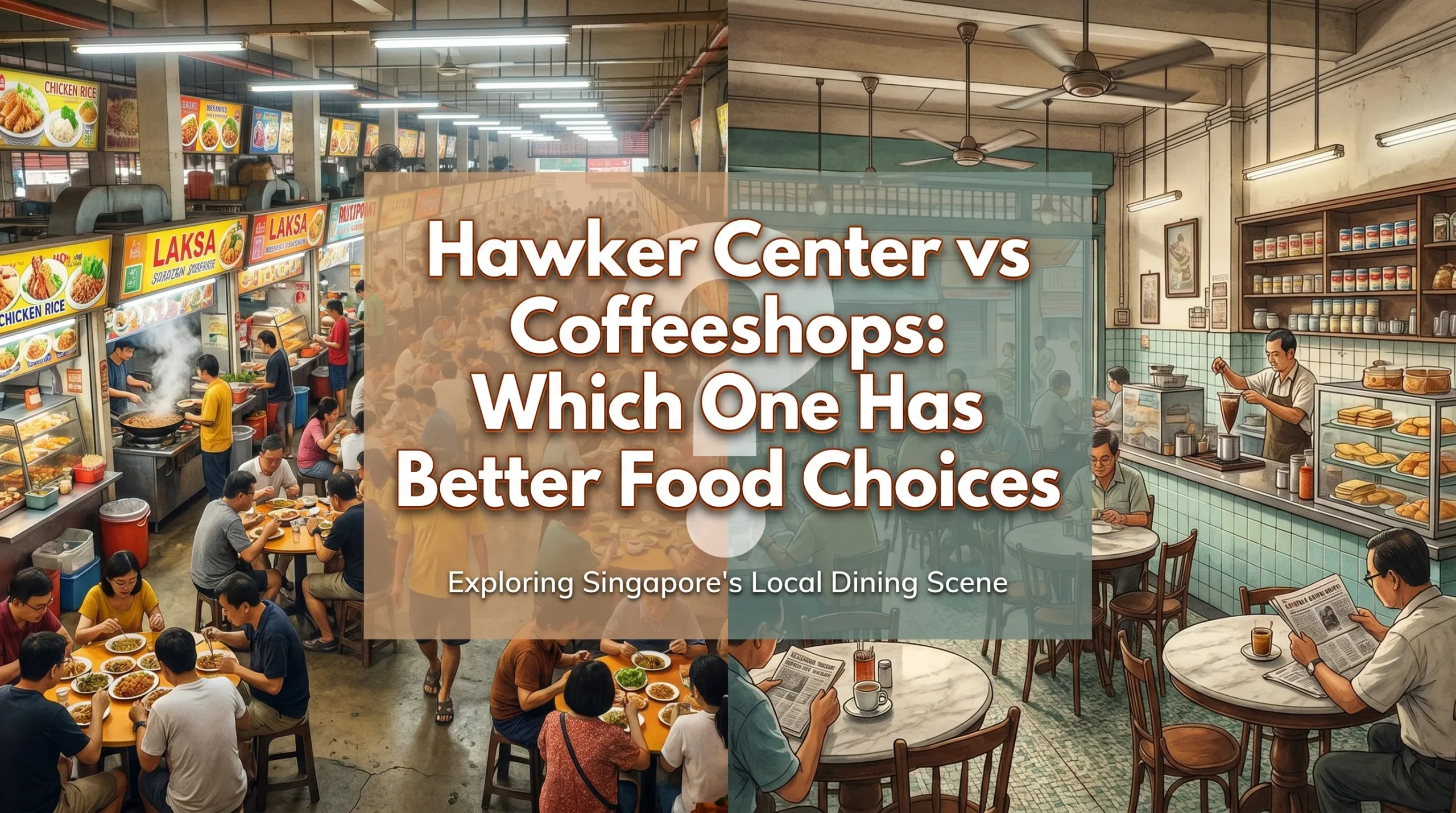
You are in Singapore and hungry for local flavor. Now you are weighing two classics. A lively hawker center with rows of sizzling woks. Or a cozy kopitiam with hot kopi and tze char. Both are part of daily life here. But they serve different needs. Hawker centers shine for choice and value. You can mix Chinese, Malay, Indian, and Peranakan plates in one meal. Prices are friendly, so you try more without stretching your budget. Kopitiams feel more intimate. You get indoor comfort, quick drinks, and simple sets. It is easy and familiar.
Cleanliness is not a worry. Stalls follow strict rules in Singapore, with regular checks and clear grades. Payment is simple too, with many places taking cashless options. So which one fits your day. It depends on what you want most. Variety and value. Or comfort and calm.
If you want the best food choices, hawker centers usually win. You get more variety, better value, and a lively atmosphere.
Meal prices show the hawker center vs kopitiam difference clearly:
|
Meal Type |
Hawker Centres |
Kopitiams |
|---|---|---|
|
Breakfast |
$4.81 |
Moderate |
|
Lunch |
$6.01 |
Moderate |
|
Dinner |
$6.20 |
Moderate |
You enjoy affordable, tasty options every time.
Hawker Center Overview
History and Features
You discover the roots of hawker centers in Singapore when you look at the city’s vibrant hawker culture. In the early 19th century, food vendors sold meals from pushcarts, serving immigrant communities and shaping local food culture. After Singapore gained independence, the government moved these vendors into organized hawker centers. This change improved sanitation, reduced disease, and eased urban congestion. The modern hawker center model appeared in the 1970s, with covered seating, centralized utilities, and regular hygiene checks.
Between 1974 and 1979, Singapore built 54 hawker centers, integrating food stalls into public housing and industrial areas. You see preservation of tradition and cultural heritage in every center, as hawker centers became community hubs that celebrate Singapore’s identity.
Hawker centers foster community engagement and cultural representation. You experience dishes from Chinese, Malay, Indian, and Peranakan cultures, reflecting Singapore’s multicultural heritage. These spaces let you connect with others and share in a communal dining experience.
Government subsidies play a big role in hawker centers. You benefit from affordable meals because Singapore subsidizes core staples for hawker vendors. This keeps prices low and supports preservation of hawker culture.
|
Evidence Type |
Details |
|---|---|
|
Subsidy Structure |
Government subsidizes rice, cooking oil, eggs, vegetables |
|
Subsidy Impact |
Enables affordable pricing for hawker stalls |
|
Budget Allocation |
|
|
Meal Viability |
$2-3 meals remain viable for hawker vendors |
|
Consumer Access |
30% of Singaporeans eat at hawker centers 3+ times/week |
|
Average Meal Cost |
$3.50-5.00 |
|
Nutritional Role |
Hawker centers provide affordable nutrition floor |
Typical Food Stalls
You find hundreds of stalls in Singapore’s 110 hawker centers. Each hawker center offers a wide range of food stalls, showcasing local food culture and heritage. You see preservation of identity and tradition in every dish. Some common food stalls include:
-
Lian He Ben Ji Claypot Rice (mixed rice, claypot rice)
-
Shi Xiang Satay (satay skewers)
-
Tian Tian Porridge (pork congee)
-
Popiah
-
Sambal Sting Ray
-
Chicken wings
-
Hokkien Mee
-
Oyster Omelettes
-
Rojak
-
Laksa
You enjoy diverse food choices, from Chinese noodles to Malay grilled meats and Indian curries. Hawker centers offer affordable, tasty meals that reflect Singapore’s cultural heritage and hawker culture. You experience preservation of tradition and identity with every visit.
Kopitiam Overview
History and Features
You step into a kopitiam and experience a blend of tradition and modern comfort. These coffee shops began as Malaysian Chinese establishments and spread to Singapore in the mid-19th century. Early kopitiams served Robusta coffee and simple meals to local communities. Over time, they adapted to changing tastes and now offer both traditional and modern dining experiences. You find kopitiams in neighborhoods and shopping malls, often with air-conditioned seating and a clean, indoor setting.
Kopitiams play a key role in Singapore’s food culture. They bring together people from different backgrounds and encourage diverse dining experiences.
Here’s a quick look at how kopitiams evolved in Malaysia and Singapore:
|
Aspect |
Malaysia |
Singapore |
|---|---|---|
|
Definition |
Coffee shops with a variety of ethnic dishes |
|
|
Origin |
Traditional Chinese coffee shops |
Introduced in the mid-19th century with Robusta beans |
|
Modern Adaptations |
Modern kopitiams in malls for young adults |
Traditional kopitiams with independent food stalls |
|
Cultural Significance |
Communal dining for various ethnicities |
Encourage diverse dining among different ethnic backgrounds |
|
Coffee Type |
Ipoh white coffee, lighter in color |
Robusta beans, preferred by locals |
|
Market Adaptation |
Halal food options for Muslim market |
Wide range of local dishes for a diverse clientele |
Rental costs shape your dining experience at kopitiams. In areas like Toa Payoh and Queenstown, lower rents mean you pay less for meals. In premium neighborhoods such as Marine Parade, higher rents push prices up. For example, economic rice sets can cost $4.18 in Marine Parade, compared to a national average of $3.44.
Typical Food Stalls
You find a variety of food stalls at kopitiams. Each stall offers something unique:
-
Tze char stalls serve stir-fried dishes made to order.
-
Drinks stalls provide coffee, tea, soft drinks, kaya toast, and soft-boiled eggs.
-
You can try traditional dishes from different ethnic groups, such as noodles, rice sets, and local snacks.
-
Popular beverages include cold lager, craft beers, and bubble tea.
Kopitiams usually offer a smaller selection than hawker centers, and meal prices range from $4 to $8. You enjoy a cozy, local atmosphere and a taste of Singapore’s multicultural food scene.
Hawker Center vs Kopitiam Difference
Food Variety Comparison
You notice the hawker center vs kopitiam difference most clearly when you look at the types of food available. Hawker centers in Singapore offer a huge range of cuisine. You can try Chinese, Malay, Indian, Peranakan, and even Western dishes. Each hawker center features dozens of stalls, so you find everything from noodles and rice to grilled meats and vegetarian options. You see food courts in hawker centers that serve fusion cuisine and trendy snacks. Kopitiams usually have fewer stalls, so you get a smaller selection of food.
You often find tze char, drinks, and a few noodle or rice stalls. The hawker center vs kopitiam difference means you enjoy more variety and multicultural food choices at hawker centers. You get to experience Singapore’s food culture in hawker centres. You taste different cuisine styles and enjoy affordable meals that reflect local traditions.
Quality and Taste Comparison
You taste the hawker center vs kopitiam difference in every bite. Hawker centers attract skilled hawker chefs who specialize in signature dishes. You find stalls with recipes passed down for generations. Many hawker centers have famous stalls that win awards for their food. You notice the freshness and authenticity in the types of food served. Kopitiams offer good food, but you often find more standardized recipes and less focus on heritage cuisine.
You see food courts in kopitiams that serve modern snacks, but the taste may not match the depth of flavor in hawker centers.
Food safety and hygiene standards also show the hawker center vs kopitiam difference. Hawker centers in Singapore follow strict rules. The National Environment Agency (NEA) oversees licensing, spot checks, and cleaning protocols. You benefit from quarterly spring cleaning and high compliance rates. Hawker centers invest in infrastructure upgrades and maintain low foodborne illness rates. You feel confident eating at hawker centres because 87% of patrons report satisfaction with hygiene.
|
Aspect |
Hawker Centers |
Kopitiams (not directly compared) |
|---|---|---|
|
Hygiene Enforcement |
NEA oversees with mandatory licensing, regular spot checks, and compliance. |
N/A |
|
Cleaning Protocols |
Quarterly ‘spring cleaning’ instituted post-SARS. |
N/A |
|
Violations and Penalties |
Fines up to S$5,000 for violations; over 1,300 enforcement actions in 2024. |
N/A |
|
Foodborne Illness Rates |
Low rates, with no more than 26 outbreak-related cases per 100,000 annually. |
N/A |
|
Patron Satisfaction |
87% satisfaction in hygiene as per 2019 NEA survey. |
N/A |
|
Infrastructure Investment |
S$1 billion allocated for upgrades through 2045-2055. |
N/A |
You see hawker centers maintain high standards, while kopitiams may vary in cleanliness and compliance.
Price and Value Comparison
You feel the hawker center vs kopitiam difference in your wallet. Hawker centers in Singapore offer affordable meals because of government subsidies. You pay less for food at hawker centres, which helps lower-income households. Kopitiams charge higher prices because rental costs are higher. You notice the price gap when you compare meal costs.
|
Type of Venue |
Average Meal Cost (SGD) |
|---|---|
|
Hawker Centers |
|
|
Kopitiams |
$4 – $8 |
Government subsidies keep hawker centers affordable. You benefit from subsidized rice, oil, eggs, and vegetables. Rental costs affect both hawker and kopitiam stalls, but hawker centers receive more support. You see the hawker center vs kopitiam difference in value. Hawker centers offer affordable meals, diverse cuisine, and high quality. Kopitiams provide comfort and convenience, but you pay more for less variety. You also notice differences in business environment.
Hawker centers have spacious, modern layouts and attract younger crowds and families. Kopitiams feel more traditional and often serve older patrons. Hawker centers offer cashless payment options and high tray return compliance.
Kopitiams may have limited cashless options and variable cleanliness.
|
Aspect |
Hawker Centers |
Kopitiams |
|---|---|---|
|
Environment |
Spacious, modern, well-ventilated |
Traditional, often more cramped |
|
Customer Demographics |
Younger crowd, families |
Varied, but often older patrons |
|
Cleanliness Practices |
High compliance with tray return |
Variable compliance |
|
Payment Options |
Cashless options available |
Limited cashless options |
You see the hawker center vs kopitiam difference in every aspect of your dining experience. Hawker centers in Singapore deliver more types of food, better cuisine, and greater affordability. You enjoy local culture and food heritage every time you visit.
Dining Experience in Singapore
Atmosphere at Hawker Centres
You step into hawker centres and feel the pulse of Singapore’s public dining culture. These open-air spaces buzz with energy as you hear the sounds of sizzling food and lively conversations. Hawker centers are usually larger than kopitiams, so you see more stalls and more people. The informal setting encourages you to share tables with strangers, which creates a sense of community. You notice that many hawker centers sit near transportation hubs, making them easy to access for both locals and visitors.
The open-air design lets you enjoy the tropical weather while you sample local food. This environment brings people together and makes every meal a social event. You experience the heart of Singapore’s food culture in these bustling spaces.
Atmosphere at Kopitiams
You find a different vibe when you visit kopitiams. These coffee shops offer a more intimate and relaxed public dining experience. The indoor setting shields you from the heat and rain, so you feel comfortable as you enjoy your meal. Kopitiams often feature clean furnishings and friendly staff, which adds to the welcoming atmosphere. You notice that Kopitiams attract a mix of patrons, but they often appeal to older generations who appreciate tradition. The smaller size means you hear less noise and enjoy quieter conversations.
You will still experience Singapore’s rich food culture, but in a setting that feels more like a neighborhood gathering spot.
Which Is Better for Groups?
You want to know which venue suits group dining best. Hawker centers work well for large groups because of their spacious seating and variety of food stalls. You and your friends can each choose different dishes and still sit together. The lively atmosphere makes group gatherings fun and memorable. Kopitiams also support group dining, especially when you value comfort and social interaction. You benefit from clean spaces and attentive staff, which help groups feel at ease. Both venues reflect Singapore’s public dining culture, but hawker centers offer more space and choices for groups, while kopitiams provide a cozy setting for close friends or family.
Variety and Accessibility
You experience unmatched variety when you dine at hawker centres. Hawker centers feature dozens of stalls, each offering different local foods from Chinese, Malay, and Indian traditions. This diversity makes it easy for you to find something you love, whether you crave noodles, rice, or grilled meats. Families appreciate the wide selection, which means everyone gets their favorite food.
Hawker centres are everywhere in singapore. You can reach most hawker centers within 30 minutes using the MRT network. These open-air food courts welcome both locals and tourists, offering meals at affordable prices, usually between S$3 and S$10. Government regulation ensures high standards of cleanliness and safety, so you can eat with confidence. The communal setting lets you enjoy local foods in a lively atmosphere, making every meal memorable.
|
Food Option Type |
Diversity Level |
Description |
|---|---|---|
|
Hawker Centers |
High |
Offer a wide variety of dishes from different cultural backgrounds, featuring dozens of stalls. |
|
Kopitiams |
Low |
Primarily serve traditional Chinese-style coffee and simple dishes like kaya toast and noodles. |
Now you see why Singapore hawker centers remain a top choice for food lovers who want quality, variety, and value. Hawker centers offer more food choices, better quality, and lower prices. You get to enjoy Chinese, Malay, and Indian food daily, supported by government subsidies. Communal dining makes eating food a social event. Kopitiams provide comfort but less variety.
For the best food experience, choose hawker centers.
FAQ
What is the main difference between a hawker center and a kopitiam?
You find more food variety and lower prices at hawker centers. Kopitiams offer a cozy indoor setting with fewer stalls and higher meal costs.
Are hawker centers safe and clean for eating?
You can trust hawker centers. The National Environment Agency enforces strict hygiene standards. Regular cleaning and inspections keep your dining experience safe.
Can you pay with cashless options at both venues?
You can use cashless payment at most hawker centers. Some kopitiams accept cashless payments, but many still prefer cash.