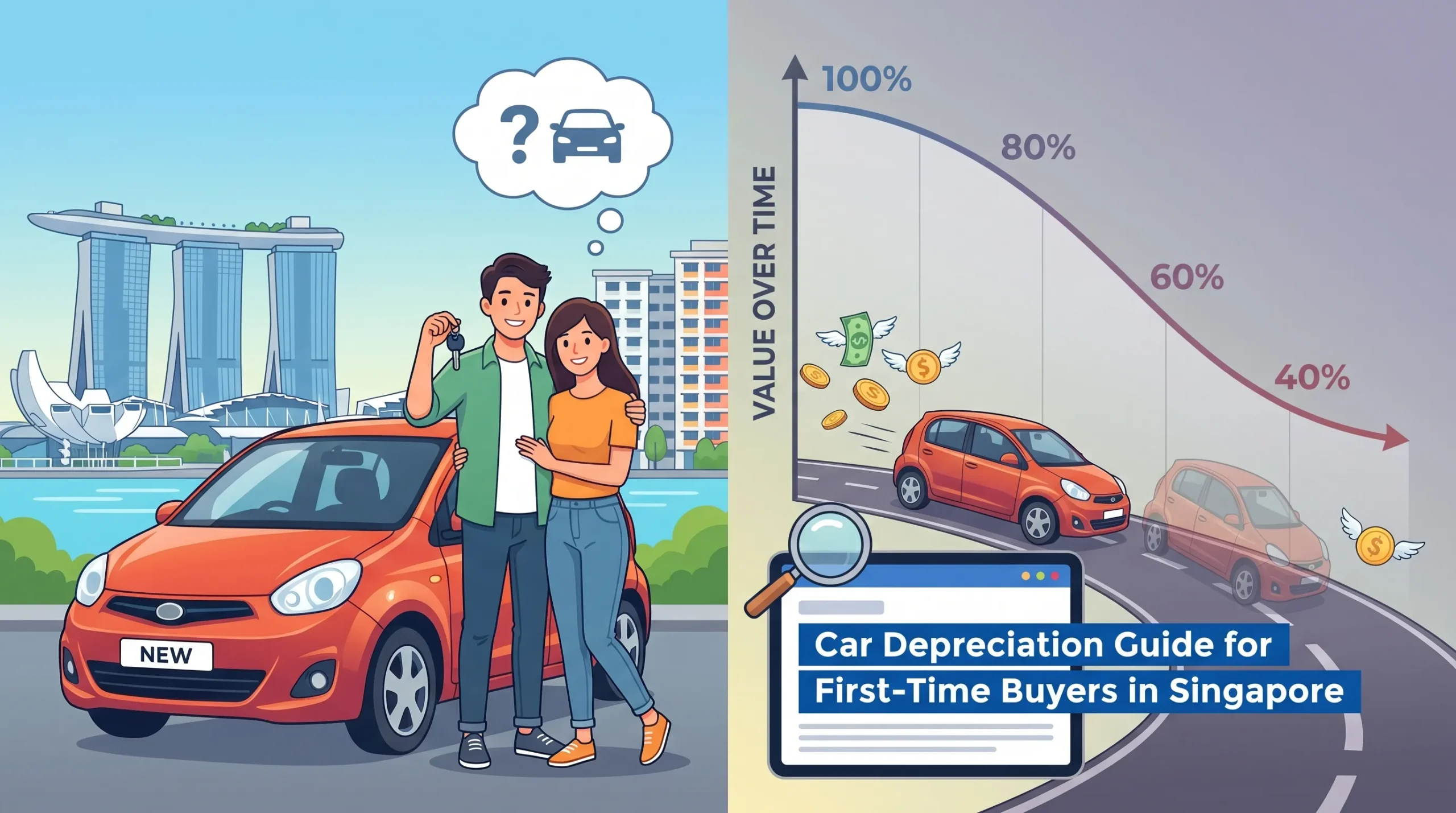
Buying your first car in Singapore feels exciting, but have you wondered why its value drops so quickly? Car depreciation Singapore means your vehicle loses value every year, sometimes faster than you expect. You might think, “I just bought this car—how can it be worth less already?” If you ignore depreciation, you risk facing unexpected financial burdens. Understanding how depreciation affects the total cost of car ownership helps you make smarter choices and avoid surprises.
Tip: Always factor in depreciation when planning your car budget.
Key Takeaways
-
Understand that car depreciation starts the moment you buy a car. Factor this into your budget to avoid financial surprises.
-
The Certificate of Entitlement (COE) significantly impacts car value. High COE prices lead to steeper depreciation, especially in the first few years.
-
Choose popular brands and models that hold their value well. Research depreciation rates to make informed decisions.
-
Regular maintenance keeps your car in good condition and helps slow down depreciation. Neglecting upkeep can lead to faster value loss.
-
Timing your purchase can save you money. Buy during promotions or when COE prices are low to reduce initial costs and depreciation.
What Is Car Depreciation Singapore
Definition and Basics
You probably hear people talk about car depreciation singapore all the time, but what does it really mean? When you buy a car, its value starts to drop the moment you drive it off the showroom floor. This decrease in value is called depreciation. In Singapore, the process feels even more intense because of the high upfront costs and strict regulations.
Let’s break it down.
Car depreciation singapore is the amount your car loses in value each year. If you bought a car for S$100,000 and it’s worth S$80,000 after one year, you’ve experienced S$20,000 in depreciation. The main reason for this drop is that cars age, rack up mileage, and face wear and tear.
In Singapore, you also have to factor in the Certificate of Entitlement (COE), which adds a big chunk to the price and affects how much your car will be worth later. Here’s what makes car depreciation singapore different from other places:
-
Car ownership in Singapore is among the most expensive in the world, second only to Luxembourg.
-
The COE adds a unique cost that you won’t find in other countries.
-
Singapore’s efficient public transport makes cars feel like luxury items, not necessities.
Why It Matters for Buyers
You might wonder why you should care about car depreciation singapore. The answer is simple: it affects your wallet. If you ignore depreciation, you could end up paying way more than you expected over the years. When you plan your budget, you need to think about how much your car will be worth when you want to sell or trade it in.
Here are some reasons why car depreciation singapore matters to you:
-
You pay a high price upfront, but your car’s value drops fast.
-
The COE portion loses value every year, so your car’s resale price can be much lower than you think.
-
If you choose a popular model, you might lose less money when you sell.
-
Maintenance and condition play a big role in how much your car depreciates.
Let’s look at a quick table to see how car depreciation singapore can impact your finances:
|
Year Owned |
Estimated Value Loss |
Notes |
|---|---|---|
|
1 |
S$15,000 – S$20,000 |
Highest drop (COE + car) |
|
5 |
S$50,000 – S$60,000 |
Steady decline |
|
10 |
S$80,000 – S$90,000 |
Near scrap value |
If you understand car depreciation singapore, you can make smarter choices. You’ll know when to buy, what to buy, and how to keep your car’s value as high as possible.
Tip: Always ask yourself, “How much will my car be worth in a few years?” before signing any papers.
Key Factors Affecting Depreciation
COE and Its Impact
You probably know that the Certificate of Entitlement (COE) is a big deal in Singapore. The COE makes car depreciation much steeper here than in other countries. When you buy a car, the COE portion loses value every year. If you own a car for ten years, the COE will hit zero by the end. This means you face high depreciation, especially in the first few years.
On average, car depreciation in Singapore runs between 10% and 15% per year. That’s about S$19,034 lost annually for many owners.
Tip: If you buy a car with a high COE price, you’ll see high depreciation right from the start.
Car Age and Mileage
Car age and mileage play a huge role in car depreciation. The older your car gets, the less buyers want it. High mileage also signals more wear and tear, which lowers the value. If your car racks up a lot of kilometers, you’ll see high depreciation. Smaller cars often need more maintenance as mileage increases, which can push the value down even faster.
-
Mileage affects resale value and depreciation rate.
-
Condition matters just as much as mileage.
-
More maintenance for small cars means higher depreciation.
Brand and Model
Brand and model matter a lot in car depreciation. Some brands hold their value better because buyers trust them. If you pick a popular model, you might lose less money when you sell. Cars from brands with strong reputations usually see lower depreciation. If you choose a less-known brand, you’ll likely face high depreciation.
Market Demand
Market demand changes how fast your car loses value. If lots of people want your car, you’ll see slower depreciation. When supply is high or new models flood the market, your car’s value drops faster. The segment type and how the car was sold new also affect retention rates.
|
Factor |
Description |
|---|---|
|
Brand and Segment |
Consumer perception and sales method influence retention rates. |
|
Market Supply |
Volume of units and competing models affect value retention. |
|
Age of Vehicle |
Older cars have lower retention due to decreased demand. |
|
Mileage |
Higher mileage reduces buyer interest and price. |
|
Condition |
Previous damage or lack of care lowers retention value. |
Maintenance and Condition
Maintenance and condition are key to car depreciation. If you take care of your car, you keep its value higher. Neglect or damage leads to high depreciation. Regular servicing, clean interiors, and careful driving help slow down value loss. Buyers look for well-maintained cars, so you should always keep yours in good shape.
Calculating Car Depreciation Singapore
You want to know how much your car will lose in value each year. Let’s break down the steps so you can calculate car depreciation easily. Singapore has its own rules, formulas, and rebates that make the process unique. If you understand these, you can plan your budget and avoid surprises.
New Car Depreciation Formula
When you buy a new car, you can calculate car depreciation using a simple formula. Here’s how it works:
-
Take the total cost of your car (including COE, taxes, and registration).
-
Subtract the expected scrap value at the end of 10 years.
-
Divide the result by the number of years you plan to own the car.
Let’s look at an example:
Depreciation per year = (Purchase Price - Scrap Value) / Years Owned
Suppose you buy a car for S$120,000. After 10 years, the scrap value is S$20,000. If you plan to keep it for 5 years:
Depreciation per year = (120,000 - 20,000) / 5 = S$20,000
You lose S$20,000 each year. This includes the COE portion, which drops to zero after 10 years.
Tip: The first year usually sees the biggest drop because of COE and registration fees.
Used Car Depreciation Formula
If you buy a used car, the formula changes a bit. You need to consider the remaining COE, the car’s age, and its current market value.
Here’s what you do:
-
Find the current market price of the used car.
-
Estimate the value at the end of your ownership (including any remaining COE).
-
Divide the difference by the number of years you plan to keep it.
Example:
You buy a used car for S$60,000. You plan to keep it for 3 years. After 3 years, you expect to sell it for S$40,000.
Depreciation per year = (60,000 - 40,000) / 3 = S$6,666.67
If the car has 4 years of COE left, the value at the end will depend on how much COE remains.
Note: Used cars with longer COE periods usually have higher resale values.
Using a Depreciation Calculator
You don’t have to do all the math yourself. Online tools help you calculate car depreciation quickly. These calculators let you enter your car’s price, age, COE, and expected resale value. You get instant results and can compare different cars.
If you want a reliable calculator, check out SGWarrior’s Car Depreciation Calculator. It’s easy to use and gives you Singapore-specific results.
-
Enter your car’s details.
-
See your annual depreciation.
-
Compare different models and COE values.
PARF and COE Rebates
When your car reaches the end of its life, you get rebates that affect the final scrap value. The two main rebates are PARF and COE.
PARF Rebate
You receive a percentage of the car’s Additional Registration Fee (ARF) based on the age of your car when you deregister it. Here’s a quick table:
|
Car Age (Years) |
|
|---|---|
|
5 or under |
75% |
|
6 to 7 |
70% |
|
8 to 9 |
65% |
|
10 and above |
0% |
If you deregister your car before it turns 10, you get a portion of the ARF back. The younger the car, the bigger the rebate.
COE Rebate
You also get a COE rebate based on how many months are left on your Certificate of Entitlement. The rebate is pro-rated, so more remaining months mean a higher rebate.
-
The COE rebate increases if you have more months left.
-
Both rebates add up to your car’s final scrap value.
When you calculate car depreciation, always include these rebates. They help you estimate how much money you’ll get back at the end.
Depreciation and Ownership Costs
Total Cost of Ownership
When you buy a car in Singapore, you pay much more than just the sticker price. The real cost includes annual depreciation, insurance, maintenance, and fuel. Depreciation often becomes the biggest expense, especially in the first few years. You might feel surprised at how quickly your car’s value drops. If you add up all the costs, you get a clearer picture of what owning a car really means for your wallet.
Here’s a quick breakdown of what you need to consider:
-
Annual depreciation: This is the amount your car loses in value each year.
-
Insurance: Premiums can change based on your age and the type of car you drive.
-
Maintenance: Repairs and regular servicing keep your car running but can be unpredictable.
-
Fuel: Gas prices go up and down, so fuel efficiency matters.
-
Loan interest: High-interest loans can add a lot to your total cost.
Tip: Always budget for more than just the monthly payment. Plan for the total depreciation and other hidden costs.
Resale Value
Thinking about resale value helps you make smarter choices from the start. Some cars hold their value better than others. If you choose a popular model or a trusted brand, you might get more money back when you sell. The condition of your car, its mileage, and how well you maintain it all play a part.
If you buy a used car, check how much value it has already lost. This can help you avoid a big drop in value later.
|
Factor |
Impact on Value |
|---|---|
|
Brand |
Higher value retention |
|
Mileage |
Lower mileage, higher value |
|
Maintenance |
Good records boost value |
|
Market demand |
Popular models sell for more |
Loan and Financing Choices
Your loan and financing choices can change the total cost of car ownership. If you pick a high-interest loan, you might feel squeezed by monthly payments. This gets even tougher if you have other debts. The initial purchase price is just the start. As your car’s value drops each year, you could end up owing more than the car is worth.
Insurance costs also depend on your car and your age, so shop around for the best deal. Maintenance and fuel costs add up, so plan for them in your budget.
-
High-interest loans increase your total cost.
-
Insurance premiums vary by car type and driver profile.
-
Maintenance and fuel costs can surprise you if you don’t plan ahead.
Minimizing Depreciation Loss
Choosing the Right Car
You want to keep your car’s value as high as possible. Start by picking a model that holds its value well. Popular brands like Toyota or Honda often see slower depreciation. Look for cars with strong resale demand. Avoid rare models that buyers might not want later.
Check the average depreciation rate for your chosen car.
Timing Your Purchase
When you buy your car matters. Prices usually drop at the end of the year or during festive promotions. Dealers offer discounts to clear old stock. If you wait for these deals, you pay less upfront and reduce your depreciation loss. Avoid buying when COE prices are high. You can track COE trends online and plan your purchase when rates are lower.
Maintenance Tips
Taking care of your car keeps its value up. Regular maintenance prevents big repairs and shows buyers your car is reliable. Here are some practices that help preserve value:
-
Change oil often to protect the engine.
-
Service brakes for safety.
-
Check tyre alignment and pressure for better fuel efficiency.
-
Inspect the battery to avoid starting problems.
-
Maintain air conditioning for comfort in Singapore’s heat.
-
Schedule regular inspections to catch small issues early.
-
Check electrical systems during humid months.
-
Keep tyres in good shape for wet roads.
Alert: Skipping maintenance leads to faster depreciation and lower resale value.
Selling Strategies
You can use smart strategies to get the best price when selling your car. The table below shows some effective ways:
|
Strategy |
Description |
|---|---|
|
Manage Mileage |
Keep mileage below 40,000. Buyers prefer cars with lower mileage. |
|
Build Dealer Relationships |
Connect with local dealers. They offer better service and disposal options. |
|
Negotiate Purchase Programs |
Understand market trends. Negotiate with dealers to manage depreciation rates. |
If you follow these steps, you protect your investment and reduce depreciation loss. You make smarter choices and enjoy better returns when it’s time to sell.
Mistakes First-Time Buyers Make
Ignoring Depreciation
Many first-time buyers get caught up in the excitement of owning a car and forget about depreciation. You might focus on the monthly payment or the color of the car, but you miss the bigger picture. Depreciation eats away at your investment every year. If you ignore it, you could lose thousands without even realizing it.
Always ask yourself how much value your car will lose before you buy.
Tip: Use online calculators to estimate yearly depreciation. This helps you plan your budget better.
Poor Timing
Timing matters a lot in Singapore’s car market. If you buy when COE prices are high, you pay more upfront and face steeper depreciation. Some buyers rush into a purchase during a price spike or just before new models launch. You end up paying more and losing value faster. Watch the market and wait for promotions or lower COE periods.
Neglecting Maintenance
Skipping regular maintenance is a common mistake. You might think you save money, but poor upkeep leads to bigger problems and faster value loss. Buyers in the used car market look for well-maintained vehicles. If your car has missing service records or visible wear, you get a lower resale price. Simple things like oil changes and cleaning can make a big difference.
-
Keep all service records.
-
Fix small issues early.
-
Clean your car regularly.
Overlooking Market Trends
You need to pay attention to trends in the used car market. Some models lose value quickly because demand drops or new technology appears. If you buy a car that’s out of favor, you struggle to sell it later. Research which brands and models hold their value. Check online forums and recent sales to spot patterns.
Car depreciation in Singapore can feel overwhelming, but you can manage it with the right approach. Always check your numbers with a car depreciation calculator like the one at sgwarrior.com. Do your homework before you buy. Choose reliable models, keep up with maintenance, and watch market trends. If you plan ahead, you protect your wallet and enjoy your first car with confidence. 🚗
FAQ
How do you calculate car depreciation in Singapore?
You subtract the expected scrap value from your purchase price, then divide by the years you plan to own the car. Online tools like SGWarrior’s Car Depreciation Calculator make this process easy.
Does COE affect your car’s resale value?
Yes, COE impacts resale value. The remaining COE years boost your car’s price. When COE runs out, your car’s value drops sharply.
Which cars hold their value best in Singapore?
Popular brands like Toyota and Honda usually keep their value longer. Buyers trust these brands, so you lose less money when you sell.
Can you reduce depreciation by maintaining your car?
Definitely! Regular servicing, clean interiors, and careful driving help keep your car’s value high. Buyers look for well-maintained vehicles.